Know Your Rights: When Your Employer Questions a Telehealth Doctor's Note
You held the note in your hands and felt nervous before you sent it. Maybe your manager raised an eyebrow last time. Maybe HR sent back an email asking, “is this real?” Maybe you've never used telehealth before and don't quite trust it yourself.
You shouldn't feel that way — and in fifteen years of issuing physician notes, in ERs, walk-in clinics, and now telehealth, I've watched hundreds of patients walk out of an exam room with a real diagnosis, a real prescription, and a real note, only to spend the entire weekend worrying about whether their employer will believe them. The system is built to support sick people, not to interrogate them. But not everyone in HR seems to know that.
This guide is for you. I'm going to walk through, in plain English, what your rights actually are, what your employer can and can't legally do, and what to send to HR if pushback happens. Bookmark it. Send it to anyone who needs it.

The big-picture truth
Most doctor's notes are accepted without a second glance. In the years I've been signing them, the rejection rate for a properly issued physician note is near zero. Most employer attendance policies require a note from a “licensed healthcare provider” and don't specify whether that provider saw you in person or through a telehealth encounter.
When rejection does happen, it's almost always because one HR person or one shift manager is operating on instinct rather than policy. “Online sounds less real than in-person.” That instinct doesn't survive five seconds of scrutiny. The moment someone asks them to point to the specific clause in the employee handbook that excludes telehealth notes — there usually isn't one.
HIPAA — what your employer cannot legally ask
Under the HIPAA Privacy Rule (45 CFR Part 164), your employer has no legal right to know your diagnosis. They are entitled to know:
- That you were evaluated by a licensed healthcare provider
- That the provider certified your absence
- The dates you should not be at work
That's the entire scope of what they're allowed to ask. If HR comes back with “what was wrong with you?” or “what's the diagnosis?” — the answer is “My physician submitted documentation; here it is.” You owe them no further explanation. The note itself is the documentation. Your medical history is yours. (This protection matters most where stigma is real — see our guide to doctor's notes for anxiety and depression for how it works in practice.)
If they push, the right line is: “I'm happy to provide additional documentation from my physician if needed, but I'm not able to disclose private medical information beyond what's already on the note.”
Need a note right now?
Physician-reviewed. Employer-accepted. $29.99 flat fee. No waiting room.
Get my doctor's note →Your rights under state law
Most U.S. states now have mandatory paid sick leave laws. As of 2026, that includes California, New York, Massachusetts, New Jersey, Colorado, Connecticut, Arizona, Washington, Oregon, Vermont, Rhode Island, Maryland, Michigan, Illinois, and the District of Columbia, with more states adopting these laws every year.
The thing to know about all of these laws: they require documentation from a “licensed healthcare provider.” They generally do not specify whether that provider was in-person or virtual. A physician's signature is a physician's signature, regardless of whether the visit happened in person or through telehealth.
If your state has a paid sick leave law and you used those hours, your employer cannot retroactively penalize you for using them — even if they personally don't like the format of the note.
Telehealth is recognized in every state
Beyond sick leave laws, every U.S. state regulates telehealth as a recognized form of physician practice. A licensed physician's evaluation and documentation via telehealth is legally equivalent to one from an in-person visit under each state's medical practice laws. There is no state where a telehealth note from a licensed physician is “less real” than an in-person note.
For state-specific telehealth law details, the Center for Connected Health Policy maintains the most current 50-state tracker.
Need a note right now?
Physician-reviewed. Employer-accepted. $29.99 flat fee. No waiting room.
Get my doctor's note →What a SickSlip note actually proves
Every note SickSlip issues includes:
- The issuing physician's full name and active state medical license number
- Your name and the certified absence dates
- A QR code linking to a verification portal
- The physician's signature
When your employer scans the QR code or visits sickslip.co/verify, they see only:
- The date the note was issued
- The certified absence dates
- The physician's credentials
They do not see your diagnosis. They do not see your medical history. They see exactly what HIPAA allows them to see — confirmation that a real, licensed physician evaluated you and signed off on the absence.
The verification system exists to make HR's job easier, not to give them another hurdle to use against you. An employer cannot legally use “I didn't scan it” as a basis for rejecting the note. Their burden is the same whether the note is from a SickSlip physician or a brick-and-mortar urgent care.
Need a note right now?
Physician-reviewed. Employer-accepted. $29.99 flat fee. No waiting room.
Get my doctor's note →What to do if your employer rejects the note
Step 1: Ask them to verify it
Most rejections happen because someone in HR didn't realize they could verify the note in 30 seconds. A polite request — “would you mind scanning the QR code on the note?” — closes most cases without further escalation.
Step 2: Send a formal email — get it in writing
If the rejection persists, send the email template below. Within 48 hours of any verbal rejection. Email creates a paper trail. A paper trail protects you if anything escalates.
Step 3: Document everything
Keep the original note. Keep your email to HR. Keep their reply. Keep a record of any verbal conversations (date, who said what). If anything ever turns into a legal matter, this is the foundation.
Step 4: If material harm occurs, escalate
A single rejected note isn't worth a lawyer. But you may have a legal claim if any of the following happen:
- You were terminated after submitting documentation
- You accumulated attendance “points” or warnings tied to the documented absence
- Your hours or shifts were cut after disclosing a medical reason
- You were retaliated against in any way for using sick leave you were entitled to under state law
Most employment lawyers offer free initial consultations. Many take strong cases on contingency, meaning you pay nothing unless they recover damages. Search for “employment attorney” in your state plus “free consultation.”
Need a note right now?
Physician-reviewed. Employer-accepted. $29.99 flat fee. No waiting room.
Get my doctor's note →The email template — copy, paste, fill in the blanks
Subject: Documentation for absence dated [START DATE]–[END DATE]
Dear [HR / MANAGER NAME],
I'm following up on my absence from [START DATE] through [END DATE], for which I submitted a physician note from Dr. [PHYSICIAN NAME], state medical license number [LICENSE #].
I understand from [our conversation on / your email of (DATE)] that the note has been questioned. I'd like to address that formally.
- The note was issued by a board-licensed physician following a telehealth evaluation. Under [STATE]'s telehealth practice laws, a licensed physician's evaluation and documentation via telehealth is legally equivalent to an in-person visit.
- The note can be independently verified at sickslip.co/verify using the 6-character code on the document. The verification page confirms the issuing physician’s identity, license number, and the certified absence dates.
- Under HIPAA (45 CFR Part 164), I am not required to disclose my underlying diagnosis to confirm the validity of the note. The note itself is the documentation.
Please confirm in writing whether the note is being accepted as documentation for the absence in question. If it is being rejected, I'd appreciate a written explanation citing the specific company policy under which it is being rejected so I can address it.
Thank you for your time.
Sincerely,
[YOUR NAME]
[YOUR EMPLOYEE ID, if applicable]
That email accomplishes three things at once. It cites the law. It points to verification. It demands a written response — which means HR has to either approve the note or commit a rejection to writing. Most HR departments will quietly approve it at that point. The ones who don't have just given you the documentation you'd need to take the matter further.
Need a note right now?
Physician-reviewed. Employer-accepted. $29.99 flat fee. No waiting room.
Get my doctor's note →A final note from the doctor
I want to say one thing directly, because I think it gets lost in the legal language.
You did the right thing by getting evaluated when you were sick. You did the right thing by getting it documented. The reason that paper trail exists, the reason a physician's signature carries legal weight, the reason your state has sick leave laws on the books — all of it is to support people who are sick or caring for someone sick, so they don't have to choose between their health and their paycheck.
If your employer pushes back on a real, valid, verifiable doctor's note, that's their problem, not yours. You have the law on your side. You have a verification system on your side. And you have a physician's signature that means exactly what it says it means.
Take care of yourself. The note is real. Send the email if you have to. Go back to bed.
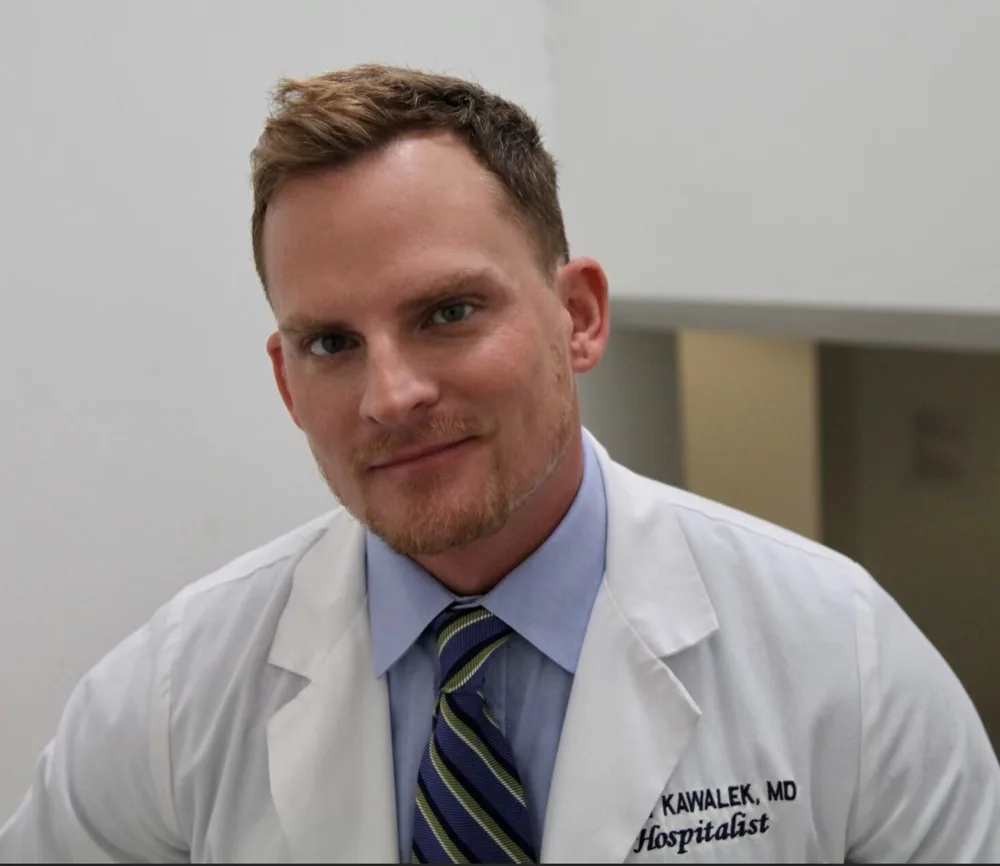
— Dr. Adam Z. Kawalek, MD
Founder & Supervising Physician, SickSlip
This article is general information, not legal advice. State laws vary and individual circumstances differ. For specific legal guidance, consult an employment attorney licensed in your state.
Is a telehealth doctor's note legally valid?
Can my employer legally ask what my diagnosis is?
What if my employer rejects the note anyway?
Do I have a legal claim if I'm penalized for using a sick day with a doctor's note?
Need a note right now?
Physician-reviewed. Employer-accepted. $29.99 flat fee. No waiting room.
Get my doctor's note →Dr. Kawalek is a hospitalist physician with 15+ years of clinical experience. He founded SickSlip to give patients fast, affordable access to legitimate medical documentation without unnecessary clinical barriers.