Getting a Legitimate Doctor's Note in Texas: Sick Leave, Your Employer's Rules, and Online Visits
If you've ever woken up in Houston, Dallas, or Austin too sick to work and immediately started worrying less about your symptoms and more about whether your boss will believe you, you're not imagining the stress. Texas is one of the states where the law gives employees very little ground to stand on when it comes to sick days, which makes the documentation question feel higher-stakes than it should. As an internist, I want to walk you through what Texas law actually says, what your employer can legitimately demand, and where a real online visit fits in. No scare tactics, no loopholes — just the facts and an honest path to a legitimate note.
Does Texas require paid sick leave? No — and that matters
Let's start with the hard truth: Texas has no state law requiring private employers to provide paid sick leave, or any sick time at all. The Texas Workforce Commission is direct about this — under the Texas Payday Law, an employer is not required to offer fringe benefits such as vacation pay, holiday pay, or other pay for hours not worked. Whether you get paid sick days is entirely up to your employer's own policy.
A few Texas cities — Austin, Dallas, and San Antonio — tried to mandate paid sick leave through local ordinances starting in 2018. All of them were blocked or struck down by Texas courts, which held that the ordinances were preempted by the Texas Minimum Wage Act because they effectively set a wage requirement the state reserves for itself. The Legislature also moved to bar cities from mandating such benefits. The practical upshot in 2026: there is no enforceable local or state paid-sick-leave mandate anywhere in Texas.
This is why the doctor's-note question carries so much weight here. In a state with mandated, accrued sick time, you'd often just use a protected day. In Texas, your job protection on a sick day usually depends on either federal law (the FMLA, which only covers serious health conditions at employers with 50+ employees if you meet the hours and tenure thresholds) or — far more commonly — on satisfying your own employer's attendance and documentation policy. That policy is where the note comes in.
What a Texas employer can and can't require for a sick-day note
Because Texas leaves sick leave to employer discretion, your employer has fairly wide latitude to set the rules — including requiring a doctor's note to verify an absence. That's legal, and applying it consistently to everyone is generally fine. A common and reasonable policy is to require a note for absences of three or more consecutive days, or for any sick day at all. If it's in your handbook and applied evenly, you're expected to follow it.
There are real limits, though. An employer generally cannot demand your specific diagnosis or detailed medical records as a condition of returning to work — a legitimate note confirms that you were evaluated and were unable to work (or the dates you should be excused), without disclosing private clinical details. If you have an FMLA-qualifying condition or a disability covered by the ADA, additional protections apply, and certification rules are governed by those federal laws rather than your employer's preferences. And an employer can't apply the note requirement selectively to punish or single out one employee — that can cross into discrimination or retaliation territory.
My practical advice: read your handbook before you're sick, not after. Know how many days trigger a note, who it goes to, and the deadline to submit it. A note that arrives on time and confirms the right dates resolves the vast majority of these situations quietly.
Need a note right now?
Physician-reviewed. Employer-accepted. $29.99 flat fee. No waiting room.
Get my doctor's note →How Texas treats telehealth and online doctor's notes
Here's the part patients are often surprised by: Texas fully recognizes telemedicine, and a note from a properly conducted online visit is just as legitimate as one from an in-person clinic. Under the Texas Occupations Code (Chapter 111), a valid practitioner-patient relationship can be established with a new patient over telemedicine — including via real-time audiovisual interaction — without a prior in-person visit, as long as the physician meets the standard of care.
That standard-of-care language is the key safeguard, and it's something I take seriously. Texas law explicitly holds that a physician providing care as a telemedicine service is subject to the same standard of care that would apply to that service in an in-person setting. In plain terms: a telehealth doctor has to ask the same clinical questions, exercise the same judgment, and decline to issue a note when it isn't appropriate — exactly as I would in an exam room. That's what separates a real online visit from the fill-in-the-blank PDF mills you should avoid.
So the legitimacy of an online note in Texas doesn't hinge on the fact that it's online — it hinges on whether an actual licensed physician evaluated you and signed it. That distinction is the whole ballgame.
Getting a legitimate note online — and why Texas licensure matters
For a note to hold up, the physician signing it needs to be licensed in Texas — not licensed somewhere else and reaching across state lines. This is the single most important thing to check before you pay any online service. A note from an out-of-state-only provider, or one with no named physician at all, is exactly the kind of document an HR department is trained to reject.
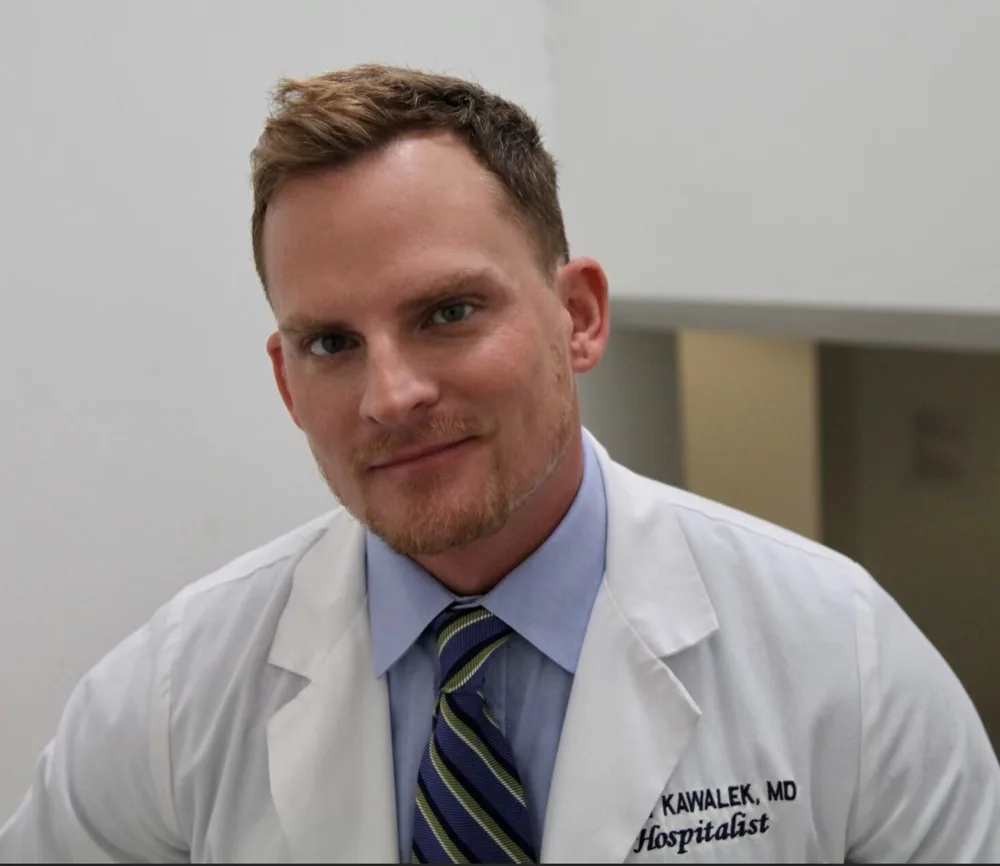
This is where I can speak directly: I'm a board-certified internist, and I'm actively licensed in Texas, which is why I built SickSlip to serve Texas patients honestly. You complete a roughly two-minute intake — the same clinical questions I'd ask you in person — and I personally review it and sign a real note, same day, for a flat $29.99. There's no subscription and no AI signing your name. If the clinical picture doesn't support a note, I'll tell you rather than issue one, because a note is a medical document, not a receipt.
To be clear about what this is and isn't: a legitimate note confirms you were evaluated and the dates you should be excused. It does not override your employer's policy, guarantee paid time off (Texas doesn't mandate that), or protect against discipline if you've already violated an attendance rule. What it does is give you honest, properly licensed documentation when you're genuinely unwell — which, in a state with no sick-leave safety net, is often exactly what you need.
Need a note right now?
Physician-reviewed. Employer-accepted. $29.99 flat fee. No waiting room.
Get my doctor's note →Frequently asked questions
Is my Texas employer required to give me paid sick days?
Can my employer in Texas require a doctor's note when I call in sick?
Can my employer demand to know my exact diagnosis?
Is an online doctor's note legal and valid in Texas?
Does the doctor who signs my note have to be licensed in Texas?
How fast and how much is a legitimate online note in Texas?
Need a note right now?
Physician-reviewed. Employer-accepted. $29.99 flat fee. No waiting room.
Get my doctor's note →Dr. Kawalek is a hospitalist physician with 15+ years of clinical experience. He founded SickSlip to give patients fast, affordable access to legitimate medical documentation without unnecessary clinical barriers.