How Long Does a Cold Actually Last? A Doctor's Honest Day-by-Day Timeline
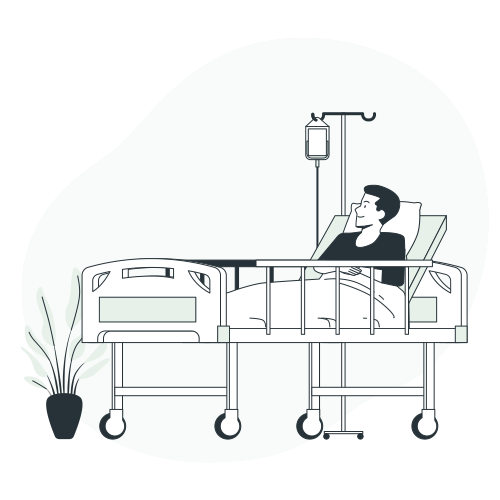
It's 11:47 PM. You've been telling yourself for two days that you're "just a little under the weather." Now you can't breathe through your nose, your throat hurts, and you just woke up at midnight because of a coughing fit. You open your phone and Google: <em>how long does a cold last?</em>
You want someone to tell you "three days, you'll be fine by Friday." I'm not going to tell you that.
I've been a board-certified internal medicine physician for over 15 years, and I've watched thousands of patients walk into my office with the same hope. Here's what's actually true: the average adult cold lasts 7 to 10 days. Many last longer. The cough at the end can hang around for two to three weeks.
I'm telling you this not to scare you, but to set you free. Most adults blame themselves for "still being sick" on day six. They push back to work too early, get someone else sick, and end up sicker for longer. The honest answer to "how long does a cold last" is the same one I give every patient: longer than you want it to. And that's normal.
Why we all underestimate the common cold
We've been culturally trained to think colds are a 3-day thing. Pharmaceutical commercials promise "back to normal in 24 hours." Wellness influencers swear by their zinc-elderberry-vitamin-C miracle cure. Your mother told you to push through. None of this matches what your immune system actually does.
A cold is a viral infection — most often rhinovirus, but also coronavirus, RSV, parainfluenza, and others. Your body doesn't kill the virus directly. It mounts an inflammatory response that takes time to ramp up, peak, and resolve. That inflammatory response is the symptoms — the congestion, the cough, the fatigue. The virus is usually cleared from your body by day 5, but the inflammation it triggered lingers for another week.
In other words: you're not still sick because the virus is still attacking you. You're "still sick" because your immune system is still cleaning up. That cleanup is normal, expected, and not optional. Pretending it takes 3 days when it actually takes 10 is how people end up dragging themselves to work feeling miserable, infecting their coworkers, and prolonging their own recovery.
Sick today? Get a physician-signed note without leaving your bed.
Board-certified MD reviews your case and signs the note — usually within minutes. $29.99 standard, $37.99 rush. QR-verifiable by your HR department.
Get my doctor's note →The day-by-day timeline
Here's what a typical adult common cold actually looks like.
Day 1 — The tickle. You feel "off." Slight sore throat. Maybe a tickle in the back of the throat. Mild fatigue. You might write it off as allergies or a bad night's sleep. The virus has been replicating for 1-3 days at this point — meaning you were contagious before you knew you were sick. What to do: cancel non-essential plans. Hydrate aggressively. Sleep 9 hours if you can. This is the only day where aggressive rest might shorten your course.
Days 2-3 — The peak. Full congestion. Sore throat at its worst. Headache. Body aches. Fatigue that feels disproportionate to anything else in your life. You might run a low-grade fever (under 100.4°F is normal for adults with a cold). What to do: stay home. Period. You are at peak contagion. Working from home is fine if your job allows; physically going into an office, school, or warehouse is how you start a chain that lays out five other people. If your employer requires documentation for a sick day, this is the moment to get a doctor's note.
Days 4-5 — The cough emerges. Congestion starts loosening. Sore throat usually resolves. But now: a dry, hacking cough kicks in, often worse at night. Energy returns slightly but you'll crash hard by 2 PM. You'll feel a deceptive sense of "I'm getting better" — and then exhaustion will remind you that you're not done. What to do: still contagious through droplets and surfaces. If you absolutely must work, mask up and isolate. Most people overshoot this day and pay for it the next.
Days 6-7 — The corner. Congestion mostly gone. Cough is the dominant symptom. Energy is back to maybe 70-80% of baseline. You can probably function for most of a workday at this point. Contagion risk has dropped sharply. What to do: safe to return to most work environments. Avoid hugging immunocompromised relatives, infants, or elderly family. Wash hands obsessively for another week.
Days 8-10 — The tail. Most symptoms are gone. The cough may still be there, especially at night or with exertion. You'll feel essentially normal during the day. No more fevers, no more body aches. What to do: live normally. Hydrate. The cough at this point is post-viral inflammation, not active infection.
Day 10 and beyond — The cough that won't quit. A persistent dry cough lasting 2-3 weeks after a cold is normal. It's caused by airway hyperreactivity from the recent infection. It's annoying. It's not dangerous on its own. What to do: see a doctor only if the cough is getting worse rather than better, you start coughing up colored mucus, you develop a fever, or you have chest pain or shortness of breath.
Sick today? Get a physician-signed note without leaving your bed.
Board-certified MD reviews your case and signs the note — usually within minutes. $29.99 standard, $37.99 rush. QR-verifiable by your HR department.
Get my doctor's note →When it's NOT just a cold — 5 red flags
Sometimes what starts as a cold turns into something more serious. As a physician, here's what makes me reach for my stethoscope and look harder:
1. Fever above 101.3°F after day 4. A cold can give you a low fever in the first 2-3 days. A high fever showing up later, or one that returns after going away, suggests a secondary bacterial infection — often a sinus infection or pneumonia.
2. Shortness of breath or chest pain. A cold should not make it hard to breathe. If you're winded climbing stairs you'd normally take fine, or you have sharp chest pain when you breathe in, get evaluated. This can indicate pneumonia.
3. Severe one-sided facial pain or headache. Sinus pressure feels uncomfortable. Sharp, one-sided pain over the cheek or forehead — especially with fever — suggests bacterial sinusitis that may need antibiotics.
4. Earache, especially with drainage or hearing loss. Adults get ear infections too. They're often a complication of colds. Pain in one ear, plus fever or drainage, needs to be looked at.
5. Symptoms getting worse after day 7, not better. This is the big one. Colds follow a curve: peak around day 3, gradually resolve. If you're worse on day 8 than you were on day 5, something else is going on.
Any of these — go to urgent care or see your doctor. Don't tough it out.
Sick today? Get a physician-signed note without leaving your bed.
Board-certified MD reviews your case and signs the note — usually within minutes. $29.99 standard, $37.99 rush. QR-verifiable by your HR department.
Get my doctor's note →Should you call out of work?
The honest medical answer: yes, on days 2-3 at minimum, often days 2-5. I know that's not what most people want to hear. American work culture punishes the sick. But here's the math:
- A cold spreads through droplets and surfaces for 5-7 days
- One sick worker can infect 3-8 coworkers
- Each of those coworkers loses 3-7 days of productivity
- The math on coming to work sick is worse for your team than staying home
Most US states allow employers to request medical documentation after 3+ consecutive sick days. If yours does — or you have a strict attendance policy (warehouses, retail, hospitality, healthcare) — you'll need an actual doctor's note.
This is what we built SickSlip for. If you're sick, you don't need to drag yourself to urgent care, sit in a waiting room for 90 minutes, pay a $50 copay, and infect everyone else there. You can get a doctor's note online without leaving your bed. It's $29.99, the intake takes about 10 minutes, and is reviewed and signed by a real US-licensed MD — me, in most cases. The note is QR-verifiable by your HR department.
Most online doctor's note services are templates with fake signatures. SickSlip is the one where the physician actually reviews your case. If you're sick and need a doctor's note online, start the intake here.
The cough that won't quit
If you take one piece of clinical knowledge from this article, take this: a post-cold cough lasting 2-3 weeks is normal. It's called post-infectious cough or post-viral cough. The virus is gone. Your airways are still inflamed and twitchy. Anything — cold air, exercise, a deep breath — can trigger a coughing fit. It will resolve on its own.
What it is not:
- Pneumonia (unless you have fever or shortness of breath)
- Bronchitis (unless you have wheezing or colored mucus)
- A "weak immune system" (you don't have one — your immune system is doing its job)
What helps:
- Honey (genuinely effective, including in adults)
- Warm fluids
- Humidified air at night
- Avoiding cold dry air
- Time
What doesn't help:
- Antibiotics (the cough is viral aftermath, not bacterial)
- Most over-the-counter cough syrups (no strong evidence)
- "Boosting" your immune system (it's already at full capacity)
If the cough is getting worse, lasts beyond 3 weeks, or starts producing colored or bloody mucus — see a doctor.
Sick today? Get a physician-signed note without leaving your bed.
Board-certified MD reviews your case and signs the note — usually within minutes. $29.99 standard, $37.99 rush. QR-verifiable by your HR department.
Get my doctor's note →The reframe I want you to leave with
Here's what I tell every patient who walks into my office feeling guilty about "still being sick" on day 5: you are exactly on schedule.
Your body is doing what bodies do. The virus is dying. The cleanup is happening. The fatigue is forced rest. The cough is your lungs remembering how to be lungs. None of this is failure. All of it is normal.
The worst thing you can do is push through, sleep less, infect more people, and prolong the whole thing. The best thing you can do is what your body is already asking for: rest, fluids, sleep, and time.
If you need documentation to take that time, SickSlip can deliver an online doctor's note within minutes, reviewed by a real physician. If you don't need documentation, great. Just stay home, sleep, and trust the timeline. You'll be back to yourself in a week. Maybe a bit longer. That's medicine, not weakness.
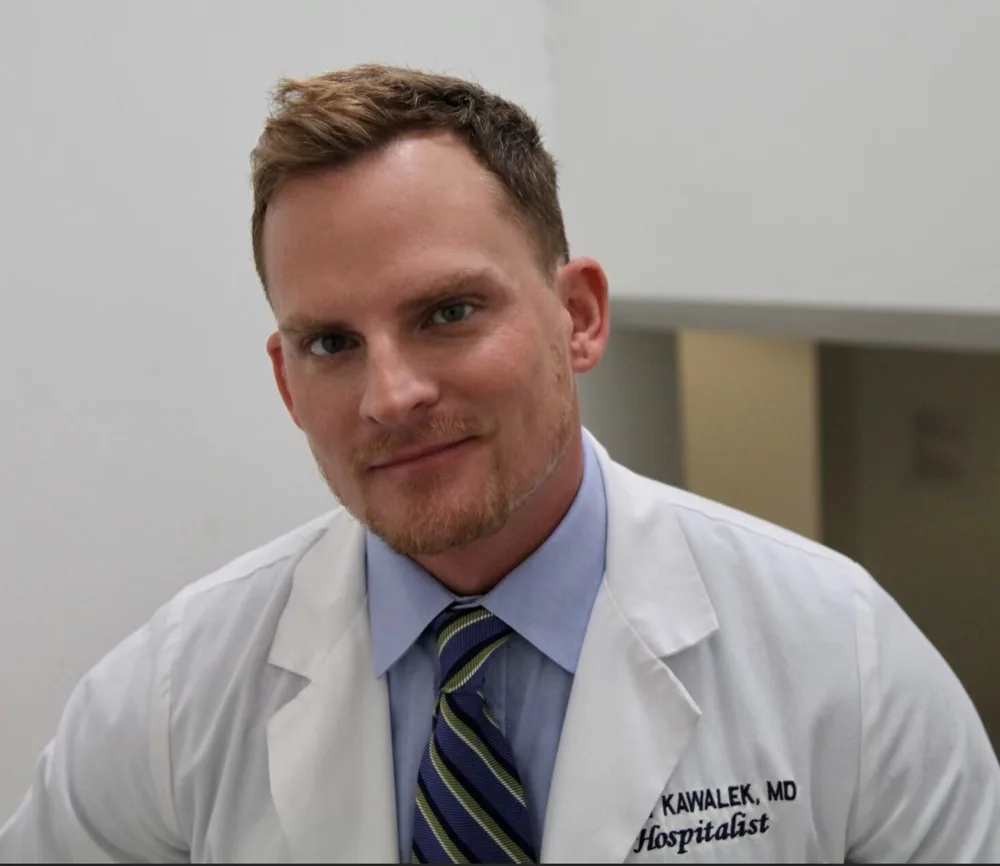
— Dr. Adam Z. Kawalek, MD
Founding Physician, SickSlip
How long does a cold actually last?
When should I see a doctor for a cold?
How long should I stay home from work with a cold?
Is the cough after a cold normal?
When is it not just a cold?
Sick today? Get a physician-signed note without leaving your bed.
Board-certified MD reviews your case and signs the note — usually within minutes. $29.99 standard, $37.99 rush. QR-verifiable by your HR department.
Get my doctor's note →Dr. Kawalek is a hospitalist physician with 15+ years of clinical experience. He founded SickSlip to give patients fast, affordable access to legitimate medical documentation without unnecessary clinical barriers.