Can You Get a Doctor's Note Without Being Seen? Yes — Same Day
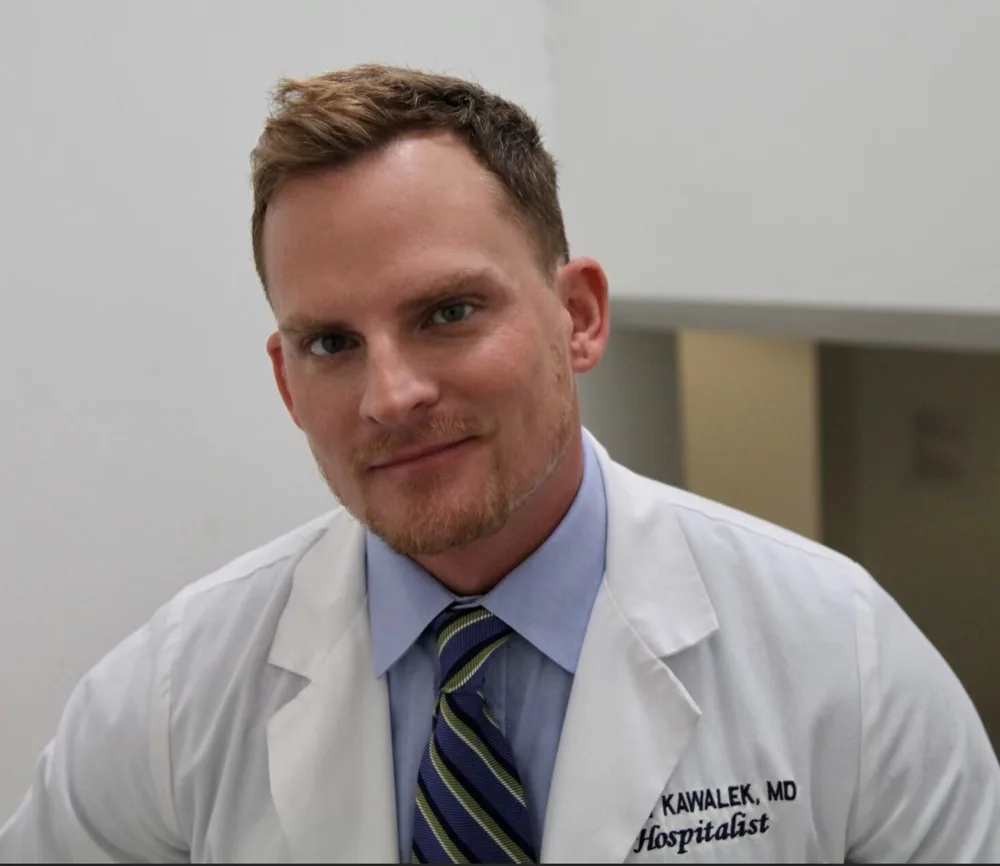
I get this question constantly. Usually from someone lying in bed with a 101-degree fever, Googling on their phone, dreading the idea of getting dressed and sitting in a waiting room for two hours just to have someone confirm what they already know: they're sick. So let me answer it directly, as a board-certified physician with 15 years of clinical experience.
The short answer
Yes. You can get a legitimate doctor's note without ever physically seeing a doctor. Since 2020, federal and state law have recognized telehealth documentation — including asynchronous review without a video visit — as clinically and legally equivalent to an in-person visit for routine, non-emergency absences. A note signed by a licensed physician after reviewing your self-reported symptoms is a real doctor's note. It contains the same legal weight, the same physician accountability, and the same employer-facing elements (signature, NPI number, state medical license) as a note you'd get after waiting three hours at urgent care. (Wondering whether urgent care itself will hand you a note without a visit? Short answer: no — here's why.)
The rest of this post explains exactly how it works, why it's legal, when it's appropriate (and when it isn't), and what to do if your HR department pushes back. I'll also walk you through the clinical decision I make every time I sign one of these notes — because if you're trusting a doctor with your employment, you should know what the doctor is actually doing on the other side of the screen.
First, let's kill the myth
There's this persistent idea that a doctor's note is only "real" if you sat in a waiting room, had your blood pressure taken by a medical assistant, waited another 20 minutes in a paper gown, and then had a physician look at you for 90 seconds before scribbling something on a pad. That's not medicine. That's theater.
The note itself — the actual document your employer wants — is a physician's attestation that you were unwell and should be excused from work. The physician's medical judgment is what gives it weight. Not the waiting room. Not the paper gown. Not the co-pay.
I've been practicing internal medicine for 15 years at institutions including Brown University, Mount Sinai, NYU Langone, Cedars-Sinai, and Johns Hopkins. I've written thousands of sick notes. And I can tell you honestly: the vast majority of sick notes I wrote in person required zero physical examination. A patient walks in with cold symptoms. I look at them, listen to their chief complaint, confirm the dates they need covered. I sign the note. They leave. That's a $150 visit and three hours of their day for something I could have handled in two minutes from a form on my phone.
The in-person requirement is not about medicine. It is a bureaucratic convention that made sense in the 1990s, when telehealth didn't exist, and has not been meaningfully updated since — even though the technology, the legal framework, and the clinical evidence all say that asynchronous documentation is appropriate for routine absences.
Need a note right now?
Physician-reviewed. Employer-accepted. $29.99 flat fee. No waiting room.
Get my doctor's note →How telehealth documentation actually works
When you use a service like SickSlip, the process looks nothing like a clinic visit — and that's the point. Here's what actually happens:
- Step 1: Intake form. You complete a structured clinical intake form that captures your symptoms, how long you've been sick, any relevant medical history, the specific dates you need covered, and whether the note is for work or school. Takes about two minutes from your phone.
- Step 2: Physician review. A licensed, board-certified physician reviews your case. That's me. I read what you've submitted, assess whether your reported symptoms meet the clinical criteria for a short-term absence note, and either issue the note or decline.
- Step 3: Electronic signature. If I approve the note, I sign it electronically. The signed note includes my full name, NPI number (a federal identifier every physician has), state medical license, the specific dates of your absence, a unique document ID, and a QR verification code.
- Step 4: Delivery to your inbox. The signed note is delivered by email as a PDF. You forward it to your employer or HR. Standard delivery is same-day. Rush delivery is under 10 minutes.
- Step 5: Employer verification (if they ask). Your employer can scan the QR code or visit our verification page to instantly confirm the note's authenticity, which physician signed it, and the dates covered.
No video call. No scheduled appointment. No waiting room. You don't upload photos of your throat. You don't wear a paper gown. You fill out a form, a doctor reviews it, and your note shows up in your inbox. That's the whole process.
Is this legal? What the law actually says
Short version: yes, it's legal. Telehealth documentation is recognized by federal law, by every state medical board, and by the Department of Labor. Here's the long version, because you deserve to know the actual legal basis.
Telehealth equivalency under federal law
The Family and Medical Leave Act (FMLA) regulations (29 CFR 825.306) and Department of Labor guidance explicitly recognize telehealth as equivalent to in-person medical care for routine documentation. In 2020, DOL issued guidance confirming that telehealth visits satisfy the in-person treatment requirement for FMLA certifications when conducted via video. For shorter-term absences that don't require FMLA documentation, the bar is even lower — any licensed physician can issue a note based on their clinical judgment.
State telehealth scope of practice
Every U.S. state has explicitly authorized telehealth as a valid mode of medical practice, with most states allowing asynchronous evaluation for non-emergency, non-prescribing interactions. A physician licensed in your state can exercise clinical judgment about your condition through any reasonable mode of communication, including a written symptom intake form. The physician-patient relationship is established at the moment the physician reviews your case and makes a clinical determination.
What the note needs to contain
A legally valid doctor's note requires the physician's name, professional credentials, license number, the patient's name, the dates of the medical absence, and the physician's signature. It does not require the diagnosis (in fact, HIPAA protects your diagnosis from being disclosed to your employer), and it does not require that the physician saw you in person. A note that contains the required elements and was signed by a licensed physician after clinical review is legally indistinguishable from one issued after a clinic visit.
Need a note right now?
Physician-reviewed. Employer-accepted. $29.99 flat fee. No waiting room.
Get my doctor's note →The clinical decision behind a doctor’s note
People sometimes assume physicians rubber-stamp telehealth notes. I don't. I decline requests regularly, and I want to be transparent about how I decide. Here's the actual clinical reasoning:
When I review a case, I'm asking three questions. First: are the reported symptoms consistent with a real, short-term illness that would reasonably prevent someone from working or attending school? Second: is this a condition that can be evaluated from self-reported history alone, or does it require physical examination, imaging, or clinical testing that I cannot perform asynchronously? Third: is there anything in the intake that suggests this is a situation where the patient should be seen in person for their own safety — a severe symptom, a red-flag description, or an indication that something more serious is going on?
For a patient reporting classic cold or flu symptoms, a stomach bug, a migraine, food poisoning, or a common musculoskeletal strain, I can make a defensible clinical determination from the intake alone. These are conditions where physical examination rarely changes management, the patient already knows what's wrong with them, and the bottleneck to recovery is rest, not intervention. Issuing a short-term absence note in those cases is exactly what I'd do if they were sitting in my exam room.
For a patient describing chest pain, shortness of breath, severe abdominal pain, sustained high fever in a small child, signs of dehydration requiring IV fluids, or symptoms of a mental health crisis — I decline the request and advise them to seek in-person care. Not because I don't believe them. Because they need care I can't provide over a symptom form. In those cases, the note is the wrong concern — the patient is the concern.
What makes a doctor’s note actually valid
If you want to make sure the note you receive is one an employer will actually accept, look for these specific elements. A legitimate physician-signed note should contain:
- The physician's full name and credentials. A real doctor, not a service name. "Dr. Adam Z. Kawalek, MD" — not "SickSlip Medical Team."
- National Provider Identifier (NPI). This is a 10-digit federal ID assigned to every licensed healthcare provider. Anyone can verify it in under 30 seconds on the CMS NPI Registry. If a note doesn't have an NPI, or the NPI doesn't match a real physician, it's not a real doctor's note.
- State medical license number. The physician must be licensed in the state where the patient is located at the time of the visit. A valid note lists the license number and the issuing state so HR can verify it.
- Patient name and specific absence dates. "Excused from work April 8–10" is a valid note. "Excused from work as needed" is not — employers will reject vague dates.
- Electronic signature. A scan of an actual signature, or a clearly marked electronic signature block. Not a typed name.
- Unique document identifier and issue date. Every note should be individually identifiable so that employers can verify it and so that duplicates can be detected.
- Employer verification path. A QR code, a verification URL, or a phone number the employer can use to confirm the note's authenticity directly with the issuing service.
Every SickSlip note contains all seven elements. The real doctor's note page shows what one looks like before you order. If you're evaluating another service, use this list as a checklist.
Need a note right now?
Physician-reviewed. Employer-accepted. $29.99 flat fee. No waiting room.
Get my doctor's note →When this is appropriate (and when it isn't)
I want to be straight with you because I think honesty is more valuable than a sale. This kind of documentation is appropriate for short-term, common illnesses — the flu, a cold, a stomach bug, a migraine, food poisoning, a minor injury, a mental health day for burnout or anxiety. The stuff that makes you miserable for a day or three but doesn't require medical intervention.
It is not appropriate for anything that requires actual clinical care. If you think you need antibiotics, imaging, a referral, or you're genuinely worried something serious is going on — go see a doctor in person. Not for the note. For you. SickSlip is documentation, not diagnosis or treatment, and we are very clear about that distinction.
It is also not appropriate for FMLA paperwork, the Amazon Healthcare Provider Form, short-term disability certifications, return-to-work clearance, school physicals, or any documentation that requires a treating physician relationship and an ongoing medical evaluation. Those require a different kind of service — typically a video visit with a physician who can document a clinical exam. If your HR department is asking for any of that, you'll need to work with your primary care physician or a telehealth service that offers scheduled video FMLA visits.
But for the 80% of sick days that are just… being sick? You don't need a $150 urgent care visit and a three-hour round trip. You need to rest, hydrate, and not get fired for it.
Need a note right now?
Physician-reviewed. Employer-accepted. $29.99 flat fee. No waiting room.
Get my doctor's note →Telehealth vs urgent care vs ER: a comparison
Not every option is equal. Here's how the three common paths to a same-day doctor's note actually compare for a routine short-term absence:
| Telehealth (SickSlip) | Urgent Care | Emergency Room | |
|---|---|---|---|
| Typical cost | $29.99 flat | $80–$250 uninsured | $500–$3,000+ uninsured |
| Time required | 2 minutes of your time, note delivered same day | 2–4 hours including travel + wait | 4–8 hours including travel + wait |
| Physician signature | Yes — board-certified MD with NPI | Yes, but often a PA or NP | Yes — ER physician |
| Physical exam | No — symptom review only | Yes | Yes |
| Appropriate for | Routine short-term illness with self-evident symptoms | Routine illness plus conditions requiring exam, imaging, or testing | Emergencies and life-threatening conditions only |
| Documentation quality | Physician-signed PDF with NPI, license, QR verification | Discharge paperwork (varies by facility) | ER discharge summary |
| Exposes others to your illness | No — you stay home | Yes | Yes |
The right answer depends on what's actually going on. Common cold, stomach bug, migraine — telehealth is the right call, and the time and money savings are enormous. Something that needs an exam, imaging, or lab work — urgent care. Something that's a true emergency — ER, and don't waste time on a doctor's note until you're stable.
The part nobody talks about
Here's what really frustrates me as a physician. The people who suffer most from the "you must see a doctor in person" requirement are the people who can least afford it. Hourly workers. People without insurance. Single parents. People working two jobs who literally cannot take three hours off to sit in an urgent care waiting room.
The system is designed for salaried professionals with good insurance and flexible schedules. Everyone else gets punished — not for being sick, but for not being able to prove they were sick in the specific way their employer demands. I built SickSlip specifically because I watched this happen in hospital wards and urgent cares for 15 years, and the policy logic doesn't hold up. More about why I built this.
What your employer actually cares about
I talk to HR professionals regularly, and I'll let you in on something: most of them don't care how you got your note. They care that it exists, that it looks legitimate, and that they can file it. They need a piece of paper for their records. That's it.
The ones who push back on telehealth notes almost never have a written policy backing that position. They're operating on instinct — "online" sounds less real than "in person." But when they see a note with a physician's signature, an NPI number, a state medical license, and a QR code they can scan to verify — the pushback evaporates.
In 15 years, across thousands of notes, the rejection rate for properly issued physician documentation is near zero. Because at the end of the day, a licensed doctor signed it. That's what matters. For more on employer acceptance specifically, read my post on whether employers have to accept online doctor’s notes.
Need a note right now?
Physician-reviewed. Employer-accepted. $29.99 flat fee. No waiting room.
Get my doctor's note →What to do if your HR department pushes back
Occasionally a manager or HR rep will try to reject a telehealth note. Here's what works, based on real patient experiences and the actual legal landscape:
First, ask for the rejection in writing. Say calmly: "I'd like to understand the policy — can you point me to the specific part of our handbook that excludes telehealth documentation?" In my experience, they won't find one, because most attendance policies require a note from a "licensed healthcare provider" without specifying in-person. Most HR professionals are not in a hurry to put a questionable position on paper.
Second, point them to the verification path. Every SickSlip note has a QR code and a unique document ID. Tell them: "This note was issued by a board-certified physician licensed in this state. You can scan the QR code or visit sickslip.co/verify to confirm the physician's license and the document's authenticity." Concrete verification usually resolves the pushback.
Third, know your rights. If you're covered by FMLA, the ADA, or a state paid sick leave law, your employer has specific legal obligations regarding documentation. If they reject a properly issued physician note and that rejection causes you to be penalized, disciplined, or terminated, you may have a legal claim. I'd encourage you to consult an employment attorney — many offer free initial consultations. For more on this, see my post on whether you can be fired for calling in sick.
If our physician is unable to issue your note after reviewing your case, you're refunded in full automatically. That's our clear commitment — the refund is tied to whether we can deliver the note, not to downstream employer decisions we don't control.
Need a note right now?
Physician-reviewed. Employer-accepted. $29.99 flat fee. No waiting room.
Get my doctor's note →When you actually need to see a doctor in person
I'd be failing at my job as a physician if I didn't also tell you when the right answer is to get off your phone and go get seen. There are symptoms that I will never evaluate asynchronously because they need a physical exam, imaging, or lab work to rule out something serious:
- Chest pain, pressure, or tightness — could be cardiac, pulmonary embolism, or pneumothorax
- Shortness of breath that's worse with exertion or at rest — could be asthma, pneumonia, heart failure, or PE
- Severe or sustained abdominal pain — could be appendicitis, gallbladder, bowel obstruction, kidney stone
- Sustained high fever (over 103°F) especially in small children or immunocompromised patients
- Signs of dehydration requiring IV fluids — persistent vomiting with inability to keep any fluids down, decreased urination, dizziness on standing
- Head injury with any neurological symptoms — confusion, weakness, persistent vomiting, loss of consciousness
- Symptoms of stroke — sudden weakness, facial droop, trouble speaking, severe headache, vision changes (call 911)
- Mental health crisis — thoughts of self-harm or harm to others, severe panic, acute psychosis (call 988 or 911)
- Signs of serious infection — spreading redness, streaking, severe pain, fever with a wound
If you're describing any of the above, please don't ask me for a note. Please go get care. A note is the wrong concern in those situations — you are the concern. And if you're ever unsure whether your symptoms need in-person evaluation, err on the side of getting seen.
So yeah — you can get a note without seeing a doctor
For the routine short-term illnesses that make up the vast majority of sick days, you can get a legitimate, physician-signed doctor's note without ever leaving your bed. It's legal. It's clinically appropriate. It's faster. It's cheaper. And the note you receive is identical in every meaningful way to the one you'd get after wasting half your day in a waiting room full of other sick people.
Stay in bed. Rest. Get better. Let us handle the paperwork.
Frequently asked questions
Can I get a doctor's note without being seen by a doctor in person?
Can a doctor write a note without actually seeing me?
Is it legal to get a doctor's note online?
Will my employer accept an online doctor's note?
How long does it take to get a doctor's note online?
How much does an online doctor's note cost?
What kinds of illnesses qualify for an online doctor's note?
Can I get a sick note online for my child?
Who actually signs my SickSlip note?
What if my employer doesn't accept the note?
Want the step-by-step walkthrough of the process? See our step-by-step guide to getting a doctor's note. Comparing options? We put SickSlip side-by-side against other services in our physician-authored buyer's guide.
When you're ready, SickSlip issues a doctor's note online the same day, reviewed and signed by a board-certified physician.
Need a note right now?
Physician-reviewed. Employer-accepted. $29.99 flat fee. No waiting room.
Get my doctor's note →Dr. Kawalek is a hospitalist physician with 15+ years of clinical experience. He founded SickSlip to give patients fast, affordable access to legitimate medical documentation without unnecessary clinical barriers.