Online Doctor's Note Services Compared: A Physician's Buyer's Guide (2026)
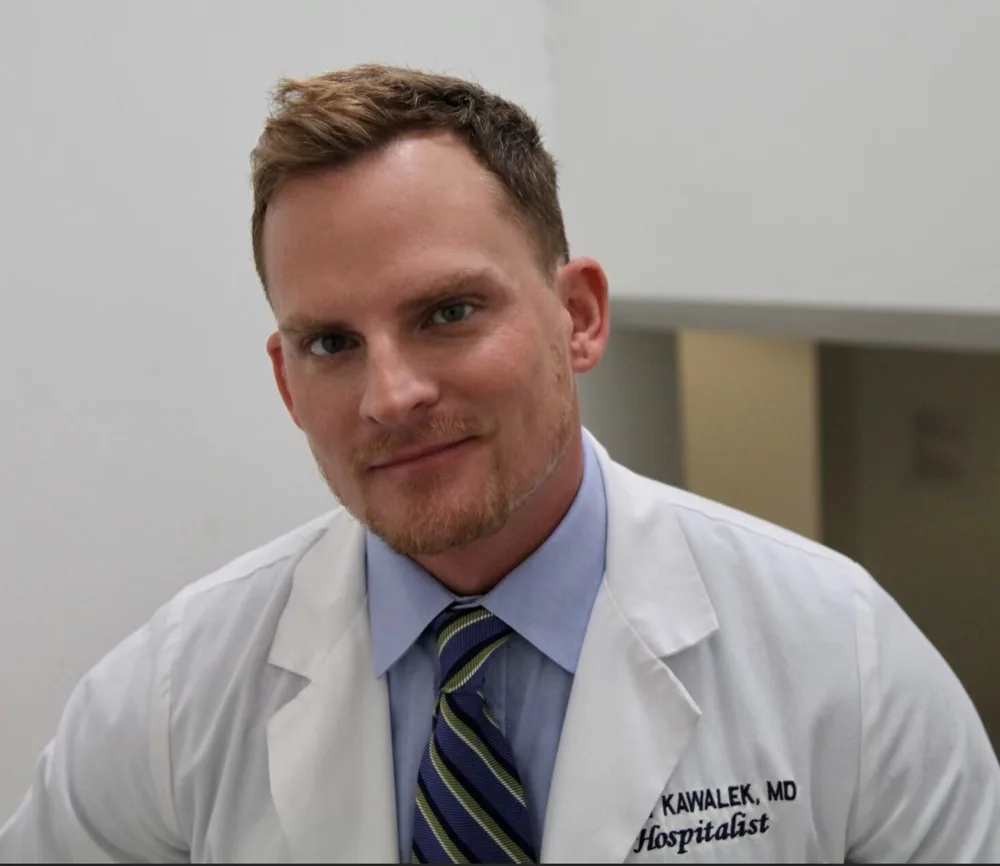
If you're trying to figure out the difference between the various online doctor's note services, you're already ahead of most people — the category has serious quality variance, from legitimate physician-reviewed services on one end to outright forgery sites on the other. I'm Dr. Adam Z. Kawalek, a board-certified internist, and I run one of the services in this category. This is my honest attempt at a buyer's guide.
In short
What separates a legitimate service from a fake one is a licensed physician who reviews your case and can say no. SickSlip, which I run, is the written option: a physician licensed in your state reviews your intake, no video call, $29.99, same day. Sesame and Doctor On Demand are video visits that can also treat you, from $34 and $99.
If you came here for a physician-signed doctor's note online, SickSlip issues them; what follows is the guidance.
Disclosure first: I founded SickSlip and reviewed every note this service has ever issued. So you're reading a comparison written by a participant in the category, not a neutral journalist. I've tried to keep the comparison factual and the framing about "when to choose each option" rather than "why we're better." Every fact below was re-verified on September 23, 2026, by opening each service's own page — prices, state coverage, and policies change, so confirm current details on each service's site before deciding.
One note on vocabulary before the comparison. A telehealth doctor's note, an online doctor's note, and an asynchronous doctor's note all mean the same thing: a note signed by a licensed clinician who reviewed your case remotely. If that is all you need today, SickSlip issues a telehealth doctor's note without an appointment for $29.99, and the rest of this guide is about how to judge the alternatives.

What to look for in a legitimate service
There are dozens of sites selling "doctor's notes" online. Most are not legitimate. Before comparing the legitimate options to each other, here are the four signals that distinguish a real telehealth service from a template generator:
- A named, verifiable physician. The reviewing physician's name should be public, with a National Provider Identifier (NPI) you can look up at npiregistry.cms.hhs.gov. If the site won't tell you who's signing your note, the note isn't real.
- State medical licensure. The physician must be licensed in your state for the absence note to be defensible. Sites that claim to operate "in all 50 states" without verifiable per-state licensure are bypassing the actual regulatory framework.
- An employer-verifiable artifact. The note should include a verification mechanism — a QR code, a unique URL, or a phone line — that an HR person can use to confirm the note was issued by the named physician on the stated date. Notes without a verification mechanism are easily forged and easily rejected.
- HIPAA + telehealth consent framework. Look for a HIPAA Notice, telehealth consent language, and a published privacy policy. Legitimate services treat your data as protected health information.
If a service fails any of those four tests, stop reading and don't buy from them. The rest of this post compares services that pass all four.
Need a note right now?
Physician-reviewed. Employer-accepted. $29.99 flat fee. No waiting room.
Get my doctor's note →Side-by-side comparison
Seven services the AI assistants and search engines compare most often, on the dimensions that decide the choice. Every cell was read off the service's own website on September 23, 2026; prices and policies change, so confirm on each site before paying. Where a site did not state a fact, the cell says so.
| Service | Price without insurance | Visit type | Speed | States | How an employer verifies |
|---|---|---|---|---|---|
| SickSlip (this site) | $29.99 flat; $37.99 rush | Asynchronous online intake, no video or phone call | Same day; median 23 minutes, 9 in 10 within two hours | 29 states, physician licensed in each (New Jersey in process) | QR code and Document ID at sickslip.co/verify, phone line, public NPI 1326223306 |
| MyTrust Medical (TrustMedical) | $34.99, shown as 30% off $49.99 | Asynchronous form, no video visit | "10 minutes" during 8 am to 8 pm ET; next business day otherwise | Site lists all 50 states | QR authentication code and a staffed verification line, 8 am to 8 pm |
| SwiftCareMD | $34.99 flat, charged after approval | Form only, no appointment or video call | Same day for most | Lists all 50 states | Physician name, NPI and license on the note; verification by email or phone line |
| MDAnywhere | From $29 per visit | Online questionnaire, no video or phone call | Reviewed 7 am to 1 am ET daily; "within minutes" | 32 states listed | Not stated on the page we read |
| Sesame | From $34 per visit | Video visit with a licensed provider required | Same day; "15 minutes" claimed | All 50 states | Standard provider letter, downloadable PDF |
| Doctor On Demand | $99 per visit without insurance; $0 with some plans | Video visit required | Provider typically available within 5 minutes, 24/7 | Not stated; "may vary by state" | Standard provider letter from a known telehealth practice |
| PlushCare | Visit fee, not stated on the note page; insurance accepted | Video visit required | Note uploaded after the visit if appropriate | Not stated on the page we read | Standard provider letter; extended-leave forms may need more than one visit |
Two things stand out. Only the asynchronous services (SickSlip, MyTrust Medical, SwiftCareMD, MDAnywhere) issue a note without a live visit, and their prices sit between $29 and $35. Among them, SickSlip is the only one whose reviewing physician is named on the site with a public NPI and whose notes carry a scannable QR code that resolves to a public verification page. The video-visit services (Sesame, Doctor On Demand, PlushCare) cost more out of pocket but can bill insurance and can treat you, not only document you.
The 30-second verdicts
SickSlip — the service I run, so weigh my bias accordingly: the strongest fit when you want the fastest, cheapest path to a verifiable physician-signed note without a video call. The QR verification and public physician NPI are the differentiators; the trade-off is scope — documentation, not treatment.
MyTrust Medical — a legitimate asynchronous competitor at a slightly higher price point. They pass the four legitimacy tests above. If their state coverage includes you and you prefer their format, they're a reasonable choice — just verify their current verification mechanism and refund terms before paying.
Traditional telehealth (Teladoc, PlushCare, Doctor on Demand — now operating under Included Health) — the right choice when you need care, not just documentation: a prescription, a diagnostic conversation, or an exam. It costs more out-of-pocket but is often insurance-billable, which can make it the cheapest option if you have coverage.
Need a note right now?
Physician-reviewed. Employer-accepted. $29.99 flat fee. No waiting room.
Get my doctor's note →When to choose each
Choose an asynchronous service (SickSlip or MyTrust) when:
- You have a routine, non-emergency illness (cold, flu, food poisoning, migraine, mental-health day) and you don't need to be examined in person to be treated.
- You need documentation in hours, not days.
- You'd rather not take a video call (you're sick, you're in a quiet office, you're the parent and your kid is the patient).
- You're not using insurance and don't want a $150+ out-of-pocket charge for a 5-minute physician interaction.
Choose traditional telehealth (Teladoc, PlushCare, Doctor on Demand) when:
- You have insurance that covers telehealth visits and you'd rather pay a copay than out-of-pocket.
- You need an actual diagnostic conversation, not just documentation — e.g., a possible UTI that may need a prescription, a skin issue you want a physician to look at, an ongoing condition that needs management.
- Your situation is borderline between needing care and needing a note. A traditional video visit gives you both.
Choose urgent care / in-person when:
- You have any red-flag symptoms — difficulty breathing, severe pain, signs of dehydration, neurologic symptoms, blood in vomit/stool, persistent high fever, or a head injury.
- You're in a high-risk group (pregnant, immunocompromised, over 65, chronic lung or heart disease) and have anything more than mild symptoms.
- Your symptoms have lasted longer than the typical course (>3–5 days for most acute conditions).
- Something is wrong and you're not sure what it is.
There's no shame in needing in-person care. The whole point of triaging the right level of care is to use telehealth for the things telehealth handles well, and to escalate quickly when something needs a clinician's eyes on it.
One more special case: if your employer runs its own documentation process — Amazon's DLS system is the most common example among our patients — a generic note may not be enough on its own. See our guide to doctor's notes for Amazon employees for how that workflow differs. And if your absence involved an emergency room visit, our guide to ER and hospital notes covers what discharge paperwork does and doesn't do for work absences.
Red flags: services to avoid
The fake-note category has grown alongside the legitimate one. Some services sell forged documents that look plausible at first glance but fall apart on verification. Specific red flags:
- No named physician. If you can't find out who's signing your note before you pay, the answer is usually "nobody real." Real physicians are publicly identifiable; their NPI is public information.
- Fabricated clinic addresses. Several known fake-note sites list addresses for clinics that don't exist. Search the address — if Google Maps doesn't show a clinic there, the note is forged.
- Made-up credential identifiers. Real medical credentials are NPI numbers (10 digits), state license numbers (verifiable on each state medical board's site), and DEA registration numbers (verifiable through the DEA). Anything else ("DPC ID", "Provider ID", "Verification Code" with a custom format) is invented.
- No employer-verification mechanism. A note that can't be independently verified by an employer is functionally useless — most HR teams that take note verification seriously will reject anything they can't cross-check.
- Promises like "100% guaranteed accepted". No legitimate physician promises that. Acceptance is at each employer's discretion. Any service that promises guaranteed acceptance is overstating what they actually deliver.
- Trustpilot reviews describing terminations for forgery. Several known fake-note services have public Trustpilot review patterns where customers report being fired after their employer attempted verification and discovered the physician or clinic doesn't exist. Search the service name on Trustpilot before buying.
If your goal is to actually use a doctor's note for time off, buying from a forgery site is worse than not having a note at all. A real verifiable physician note from a legitimate service is documentation that holds up under scrutiny; a fake note that gets caught is grounds for termination plus, in some workplaces, a referral to HR for fraud.
Frequently asked questions
Are online doctor's notes legal?
How can my employer tell if a doctor's note is real?
Why is SickSlip cheaper than traditional telehealth?
Can I use insurance for an online doctor's note?
What if my employer rejects an online doctor's note?
Are there things an online doctor's note can't be used for?
Need a note right now?
Physician-reviewed. Employer-accepted. $29.99 flat fee. No waiting room.
Get my doctor's note →Dr. Kawalek is a hospitalist physician with 15+ years of clinical experience. He founded SickSlip to give patients fast, affordable access to legitimate medical documentation without unnecessary clinical barriers.