Dr. Adam's Ultimate Guide to Doctor's Notes in 2026
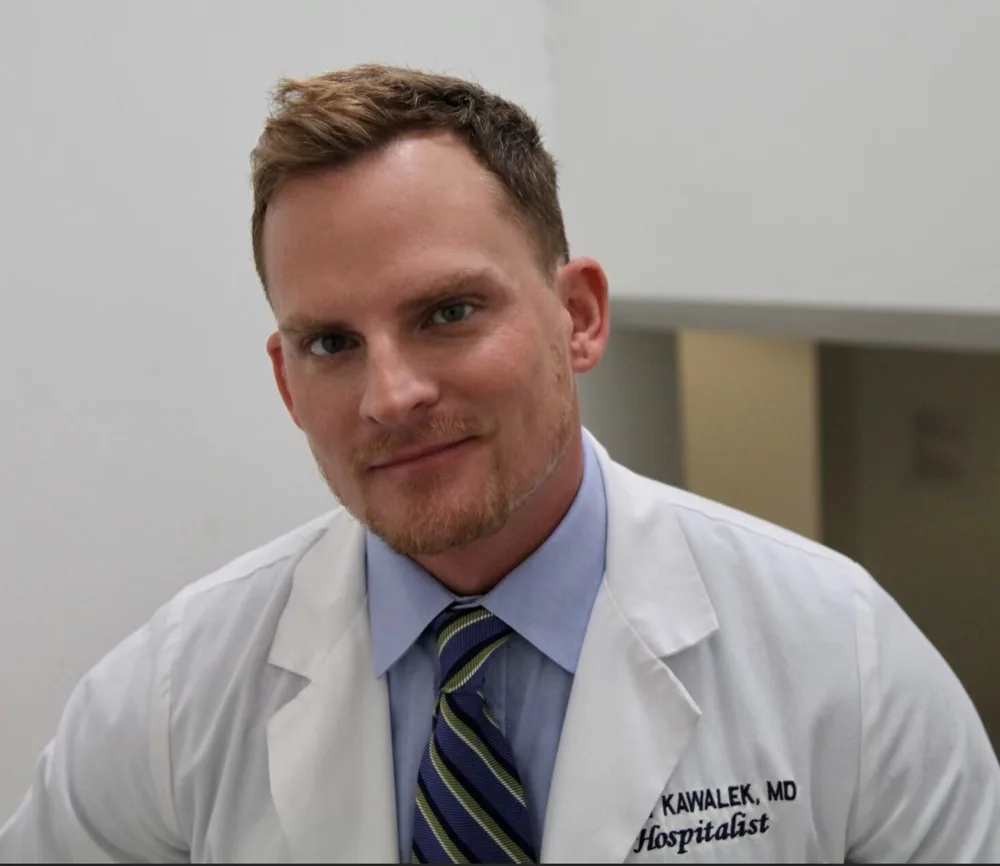
I'm Dr. Adam Z. Kawalek. I've been a board-certified internist for 15 years. I've worked at Brown, Mount Sinai, NYU Langone, Cedars-Sinai, and Johns Hopkins. And I've personally written thousands of doctor's notes — for work, for school, for jury duty, for travel refunds, for court. So here's everything I know about doctor's notes in 2026, from the perspective of the doctor actually writing them.
Short on time? An online doctor's note from SickSlip covers the paperwork; the details below cover the rest.
This is a complete guide. If you just need the short answer, it's in the very next section. If you want the whole picture — why these notes exist, how to get one quickly without overpaying, what makes one legally valid, and how to avoid getting burned by a fake — keep reading.

The short answer
A doctor's note is a signed document from a licensed physician confirming you were medically unable to work or attend school on specific dates. You can get one after an in-person clinic visit, a video telehealth visit, or — for routine short-term illnesses — an asynchronous online review of your symptoms. A legitimate doctor's note contains the physician's name, state medical license, NPI number, the patient's name, the absence dates, and a signature. It does not need to contain a diagnosis. HIPAA protects that information from being shared with your employer.
If a note is signed by a real licensed physician and contains those elements, it's a legally valid doctor's note regardless of how the visit happened. The fastest way to get one in 2026 is through an asynchronous telehealth service like SickSlip, which delivers a physician-signed doctor's note to your inbox the same day for a flat $29.99 fee.
What a doctor's note actually is (and isn't)
A doctor's note — sometimes called a sick note, physician note, or medical excuse — is a short document that answers exactly two questions for an employer or school:
- Were you actually sick on the dates in question, based on the medical judgment of a licensed physician?
- When is it medically reasonable for you to return to work or school?
That's it. A doctor's note is not a medical report. It is not a diagnosis. It is not a treatment plan. It is not a prescription. It is not a recommendation for accommodations. It's a short attestation from a licensed physician that you were unwell and should be excused.
That distinction matters because it shapes everything downstream — how much a note should cost, how it can be issued, what an employer is legally allowed to ask about, and what kind of medical evaluation is actually required to produce one. For a cold, a stomach bug, a migraine, the flu, or a minor injury, the evaluation required is essentially: listen to the patient, confirm the timeline makes sense, and use clinical judgment to sign off on the absence. That can happen in a clinic. It can happen on a video call. Or it can happen through an asynchronous review of a structured symptom intake form.
Need a note right now?
Physician-reviewed. Employer-accepted. $29.99 flat fee. No waiting room.
Get my doctor's note →The different ways to get a doctor's note in 2026
There are five realistic paths to a doctor's note right now. Four of them are legitimate. One is a trap I'd encourage you to avoid. Let's go through them.
Option 1: See your primary care doctor
If you have an established relationship with a primary care physician who can see you the same day, this is the traditional option. The upside: your own doctor knows your history. The downside: most primary care offices can't see you same-day for a sick visit, many require scheduling days out, and the office visit typically runs $150–$300 without insurance even when you just need a note. Also, you have to leave your house, sit in a waiting room, and expose other people to whatever you've got.
Option 2: Urgent care walk-in
The most common path when someone wakes up sick on a work day. Urgent care clinics accept walk-ins, can see you within a few hours, and will issue a note at the end of the visit. Typical uninsured cost: $80–$250. Typical time commitment including travel, check-in, wait, exam, and paperwork: 2–4 hours. Urgent care is the right call if you need actual clinical testing or imaging (strep test, chest x-ray, rapid flu panel) — but for a patient who just needs a physician to confirm they're sick and sign a note, it's enormous overkill.
Option 3: Video telehealth
Platforms like Doctor On Demand, PlushCare, and Sesame offer a scheduled video visit with a licensed provider, after which they'll issue a doctor's note if medically appropriate. Typical cost: $99–$150 per visit, sometimes covered by insurance. Time commitment: 20–40 minutes, plus the wait for an available appointment. Good option if you need to combine the note with actual clinical care (a prescription, a referral, a conversation about your symptoms).
Option 4: Asynchronous telehealth (my approach)
This is the model SickSlip uses. You fill out a structured symptom intake form on your phone, a board-certified physician reviews your case asynchronously, and if the review supports it, the physician issues a signed doctor's note delivered to your inbox. No video call. No scheduled appointment. No waiting room. Standard turnaround is same-day. Rush delivery is under 10 minutes. Flat fee: $29.99, or $37.99 with rush processing. This is the right option for routine short-term absences where you already know you're sick and don't need clinical testing or a prescription.
Option 5: Fake notes and template generators (don't do this)
There's an entire underground market of websites selling editable doctor's note PDFs, template generators, and "signed" notes with fake physician names. I'm going to be blunt: using one of these is a very bad idea. Employers today verify notes by looking up the physician on the CMS NPI Registry or calling the issuing practice. A fake note is easy to catch, and getting caught with one is grounds for termination — and in some states, prosecution for fraud. The $5 you save is not worth the job you lose. Spend $29.99 on a real physician-signed note from a service that actually employs a licensed doctor.
Need a note right now?
Physician-reviewed. Employer-accepted. $29.99 flat fee. No waiting room.
Get my doctor's note →Comparing the options
| Option | Typical Cost | Time Required | Physician Signed | Best For |
|---|---|---|---|---|
| Primary care doctor | $150–$300 | 1–3 days wait + visit | Yes | Established patient relationship |
| Urgent care | $80–$250 | 2–4 hours same-day | Usually (often PA/NP) | Need clinical testing or exam |
| Video telehealth | $99–$150 | 20–40 min scheduled | Yes | Need a prescription or conversation |
| Async telehealth | $29.99 flat | 2 min same-day | Yes (real physician) | Routine short-term absence |
| Fake template / generator | $5–$25 | Instant | No (forged) | Getting fired and possibly prosecuted |
How much should a doctor's note actually cost?
The honest answer: somewhere between $30 and $150, depending on how much clinical service is bundled with the note. For a bare-minimum physician-signed note for a routine short-term absence, $29–$40 is a fair price. For a visit that includes diagnosis, treatment advice, or a prescription, $80–$150 is fair. Anything over $200 for a standalone note is overcharging, and anything under $25 is almost certainly a fake template service.
What you're paying for, when you pay a fair price, is the physician's licensed medical judgment and professional accountability. A licensed doctor's signature on a document is a legally binding statement. If I sign a note saying you were sick, I'm personally vouching for that determination and putting my medical license behind it. That's not something that should cost $5.
Is it legal to get a doctor's note online?
Yes. Telehealth is explicitly authorized in every U.S. state, and federal law treats telehealth visits as equivalent to in-person visits for the purposes of issuing routine medical documentation. Here are the specific authorities that matter:
- Federal FMLA regulations (29 CFR 825.306) define the contents of a valid medical certification but don't require any specific visit format. The definition of "health care provider" explicitly includes any licensed MD or DO acting within the scope of their practice.
- DOL guidance on telehealth (issued 2020, extended 2021+) confirmed that telemedicine visits can satisfy the in-person treatment requirement for FMLA purposes, which means telehealth is clinically and legally equivalent to in-person for leave documentation.
- State telehealth scope-of-practice laws in all 50 states authorize physicians to evaluate and document routine, non-emergency conditions via telehealth, including asynchronous review.
- HIPAA Privacy Rule (45 CFR Part 164) protects your diagnosis from being disclosed to your employer, even in a medical note.
None of this is a gray area. Telehealth doctor's notes are legal. The only thing standing in the way of broader acceptance is employer inertia, not law. For more on the specific legal question, read my detailed explanation of how async doctor's notes work.
What makes a doctor's note legally valid?
When an HR department evaluates a doctor's note, they're looking for seven specific elements. If all seven are present and the physician is real, the note is valid. If any are missing or fabricated, it's not.
- The physician's full name and credentials — a real named MD or DO, not "Medical Team" or a service brand name.
- National Provider Identifier (NPI) — a 10-digit federal ID. Anyone can verify it on the CMS NPI Registry in under 30 seconds.
- State medical license — the physician must be licensed in the state where you (the patient) are located at the time of the visit.
- Your full name — the patient's name, matching what your employer has on file.
- Specific absence dates — "excused from work April 8–10" is valid. "Excused as needed" is not.
- Physician signature — electronic or ink, clearly marked. A typed name without a signature block is not a signature.
- Verification path — a QR code, verification URL, or contact information the employer can use to confirm the note's authenticity.
Every SickSlip note includes all seven. If you're evaluating a different service, use this list as a checklist before you pay.
Need a note right now?
Physician-reviewed. Employer-accepted. $29.99 flat fee. No waiting room.
Get my doctor's note →Also read
- Can You Get a Doctor's Note Without Seeing a Doctor? A Physician Explains — the legal basis for async telehealth documentation, explained in depth.
- Do Employers Have to Accept Online Doctor's Notes? — the short answer is almost always yes. Here's what to say if HR pushes back.
- Can You Get Fired for Calling in Sick? — a physician explains employment-at-will, points-based attendance systems, and how a doctor's note changes the math.
Need a note right now?
Physician-reviewed. Employer-accepted. $29.99 flat fee. No waiting room.
Get my doctor's note →Will my employer actually accept a doctor's note I got online?
In almost every case, yes. I've been signing notes for 15 years, and the rejection rate for a properly issued physician note is near zero. Most employer attendance policies require a note from a "licensed healthcare provider" and don't specify the visit format. Online or in-person, a licensed physician's signature carries the same legal weight.
When rejection does happen, it's almost always because the manager or HR rep is operating on instinct rather than policy. "Online sounds less real than in-person." That instinct doesn't hold up when someone asks them to point to the specific clause in the employee handbook that excludes telehealth notes. There usually isn't one.
If your HR pushes back on a SickSlip note, you have three things on your side: (1) a physician with an NPI and state license that anyone can verify, (2) a QR code that links to our verification page, and (3) our commitment that if our physician is unable to issue your note after review, you're refunded in full. Real doctor, real verification, clear policy.
How to submit a doctor's note to specific employers
Different companies have different documentation processes. Here's where we've written up the specifics for common employers:
- Amazon — A to Z portal, Voluntary Time Off vs excused absence, and what Amazon's HR actually checks.
- Walmart — Walmart's point-based attendance system and how to protect your points with a note.
- Target — submitting via myPay portal or your HR ETL.
For employers we haven't covered yet — FedEx, UPS, Starbucks, United Airlines, Boeing — the process is usually the same: forward the PDF note to your supervisor or HR email, or upload it through the company's leave/absence portal. If your employer has a physician verification line, they can call our verification line at (877) 861-4165 or scan the QR code on any SickSlip note.
Need a note right now?
Physician-reviewed. Employer-accepted. $29.99 flat fee. No waiting room.
Get my doctor's note →What a doctor's note can and can't be used for
A doctor's note from SickSlip can be used for:
- Excused absences from work due to short-term illness
- Excused absences from school due to short-term illness
- Missed classes or missed exams that a teacher or professor is willing to reschedule with documentation
- Missed appointments you need to reschedule (dentist, DMV, court date)
- Travel or event refund requests that require a doctor's note
- Excused absences from jury duty in most jurisdictions (check your local court's rules)
A doctor's note from SickSlip cannot be used for:
- FMLA paperwork or the Amazon Healthcare Provider Form — these require a scheduled video visit with a physician to satisfy DOL requirements
- Short-term disability certifications or state disability claims
- Return-to-work clearance after a surgery, hospitalization, or work-related injury
- School physicals, sports physicals, or DOT physicals
- Any documentation that requires a physical examination, imaging, or lab testing
- Legal testimony or expert witness statements
If you need any of the items in the second list, you'll need either your primary care physician or a telehealth service that specifically offers scheduled video visits for FMLA and disability paperwork. We're built for routine short-term absences, not extended leave documentation.
Common mistakes I see people make
After 15 years of issuing sick notes and watching patients navigate employer documentation requirements, here are the five mistakes I see over and over:
Mistake 1: Using a fake note or template generator
Covered above, but worth repeating: any site offering a "printable doctor's note template" or an "instant" note without a physician is selling you a forgery. Employers catch these now because they can verify any physician's NPI in 30 seconds. Getting caught is grounds for immediate termination at most companies, and depending on your state, it can constitute fraud.
Mistake 2: Asking for more dates than you actually need
If you were sick Monday and Tuesday, ask for a note covering Monday and Tuesday. Don't ask for a note covering Monday through Friday when you plan to be back Wednesday. Employers notice when the documented absence dates don't match the actual absence, and it undermines the credibility of the note. It also puts the issuing physician in a difficult position clinically.
Mistake 3: Being vague about your symptoms on the intake form
When I review a case, I'm using the information you give me to make a clinical determination. If you write "I don't feel well" and nothing else, I have very little to work with and may need to decline or ask for more detail. Be specific: what symptoms, how long, how severe, what makes it better or worse. The clearer your intake, the faster the review.
Mistake 4: Not verifying the physician who signed your note
Before you pay any online doctor's note service, take 30 seconds to look up the physician on the CMS NPI Registry. If the service uses a real named physician, you'll find them. If they use a fake name or refuse to name the physician, walk away. My name is Dr. Adam Z. Kawalek, my NPI is 1326223306, and you can look me up in that registry right now.
Mistake 5: Overpaying out of panic
When you're sick and your boss is asking for a note, it's easy to panic-click the first result that appears. A routine physician-signed note should not cost $150. If you're not getting clinical care beyond a note, $29–$40 is a fair price.
Need a note right now?
Physician-reviewed. Employer-accepted. $29.99 flat fee. No waiting room.
Get my doctor's note →Also read
- How to Get a Doctor's Note for Work (Step-by-Step 2026 Guide) — a step-by-step walkthrough of the SickSlip process from intake to employer submission.
- School Sick Note Policies: Are They Reasonable? — a physician parent's take on how schools handle absences and what actually gets accepted.
How SickSlip is different (and why I built it)
I want to be upfront about this because trust matters in a category full of fakes. Most online doctor's note services are either (a) faceless multi-provider boards where you don't know who signed the note, or (b) outright template generators with no physician involvement at all. SickSlip is neither.
I built SickSlip myself, and I personally review and sign every note. My name is on the service. My NPI is on every note. My medical license is on every note. If one of my notes gets challenged by an employer or a medical board, I'm the physician they talk to. There's no other doctor to blame.
A few specific things I built into SickSlip that most competitors don't have:
- 3-note-per-account limit. SickSlip is not a subscription service and I won't let anyone abuse it. After three notes on a single account, I manually review any further requests. This is the single biggest safeguard against using SickSlip inappropriately.
- QR code verification on every note. Your employer can scan and instantly confirm the note's authenticity, the issuing physician's license, and the documented absence dates. No phone calls needed.
- Full refund if we can't issue your note. If our physician reviews your case and is unable to issue the note for clinical or documentation reasons, you're refunded in full, automatically.
- A real physician who declines when he should. I decline cases that don't meet the clinical criteria for a short-term absence note. I'll never issue a note just because someone paid for one.
- Licensed in 30+ states, expanding. If you're in a state where I'm not yet licensed, we can't serve you — I refuse to issue notes across state lines where I don't hold a medical license.
Frequently asked questions
How fast can I get a doctor's note online?
How much does an online doctor's note cost?
Do I need insurance?
Is an online doctor's note legally valid?
Will my employer accept an online doctor's note?
What's the difference between a doctor's note and FMLA paperwork?
Can I get a doctor's note for my child?
What conditions does SickSlip cover?
What if I live in a state where SickSlip isn't licensed?
Who actually signs my SickSlip note?
What does my employer see on a SickSlip note?
What if my employer doesn't accept the note?
Final word
The healthcare system in this country makes it weirdly hard for working people to prove they were sick. I've watched hourly workers lose shifts, students lose exam grades, and parents lose their jobs — not because they weren't actually ill, but because they couldn't get a licensed physician to sign a piece of paper within their employer's timeline. That's the problem SickSlip exists to solve.
If you're reading this because you're sick right now and need a note fast, I hope the process is simple. Fill out the form. I'll review it. You'll have a physician-signed note in your inbox. Rest up. Drink water. Get better. That's the whole idea.
Need a note right now?
Physician-reviewed. Employer-accepted. $29.99 flat fee. No waiting room.
Get my doctor's note →Dr. Kawalek is a hospitalist physician with 15+ years of clinical experience. He founded SickSlip to give patients fast, affordable access to legitimate medical documentation without unnecessary clinical barriers.