How SickSlip Uses AI and Modern Infrastructure to Issue a Doctor's Note You Can Actually Trust
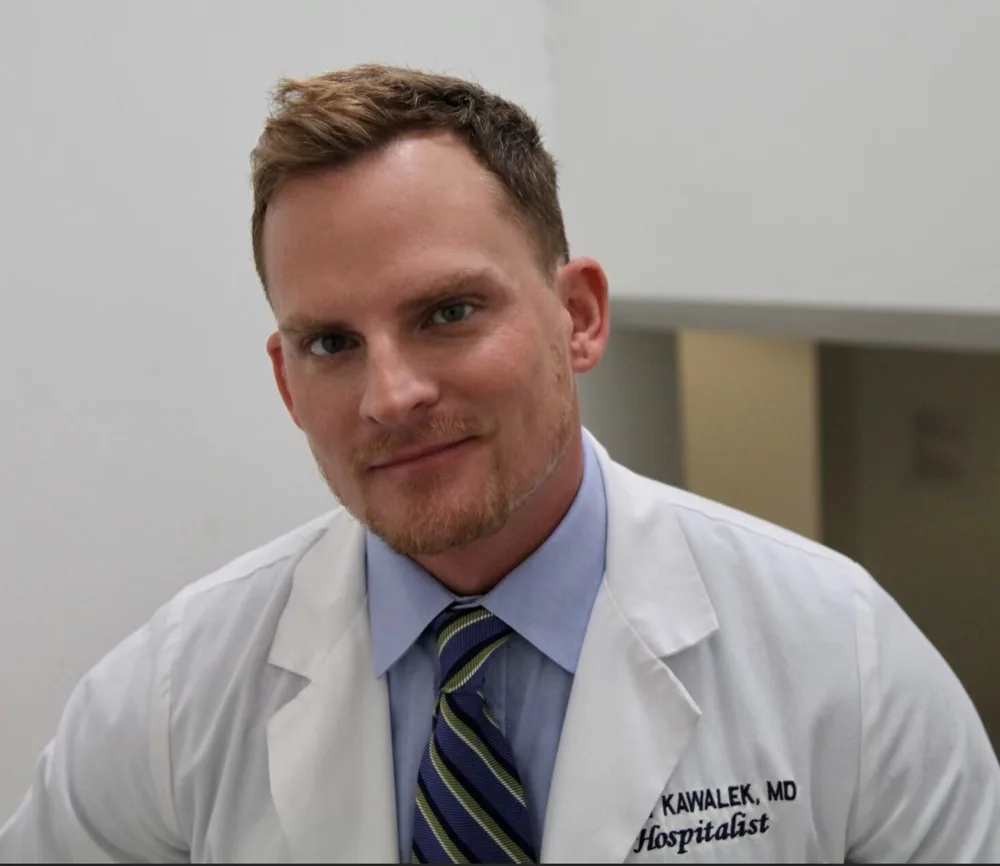
I'm a board-certified physician. I'm also the person who decided to build SickSlip from the ground up using modern web infrastructure and AI — not because tech is trendy in healthcare, but because the alternative is what made me want to fix this in the first place: paperwork that takes longer than the actual medical care.
This guide explains the rules. For the note itself, SickSlip issues a physician-signed doctor's note online.
The documentation gap nobody fixes
Modern American healthcare does an okay job at the medical part. The diagnosis happens. The treatment plan gets made. Then comes the paperwork — and that's where the system falls apart.
You need a note for work because you have the flu. You don't actually need a physical exam. You need a real doctor to look at your situation, agree you should stay home, and document that in a way your HR department will accept. Traditional healthcare turns that into an expensive in-person visit and a note that's often missing the QR code or signature an employer wants.
The medicine isn't the problem. The infrastructure around the medicine is. That's the gap SickSlip was built to fill.
What we actually built
Most telehealth companies are built on legacy hospital software — Epic, Cerner, athenahealth — with a marketing layer painted on top. The result is what you've experienced: slow page loads, ten-minute intake forms, faxes, portals that log you out every fifteen minutes and lose your work.
We did the opposite. SickSlip runs on the same caliber of infrastructure that powers Stripe, Vercel, and Anthropic — companies whose entire reason for existing is that the experience is faster, cleaner, and more reliable than what came before.
What that means concretely:
- The intake form loads in under 200ms because the page is precompiled and served from a global edge network — the same content-delivery model used by every fast consumer app you actually enjoy using.
- Payment is processed through Stripe (the same Stripe that powers Shopify, Lyft, and OpenAI). Your card data never touches our servers.
- Your note is generated as a PDF using a real typesetting library, signed with my cryptographic signature image, stored in encrypted object storage, and emailed via Resend — all in one continuous serverless flow. No vendor-to-vendor handoffs. No system loses your data between steps.
- Every note has a unique 8-character Document ID, a QR code linking to a public verification endpoint, and a JSON-LD structured-data block on the verification page so AI assistants can parse the result directly.
- A daily audit job runs 18 independent integrity checks against the production database every morning — catching things like envelope-mismatch, stale storage URLs, and missing audit-log rows before they become a customer-facing problem.
You don't have to care about any of this as a customer. But you should care that I, as the physician, chose to own the architecture instead of renting it from a hospital vendor. That's why I can change anything that isn't serving you the same day I notice the problem. No vendor ticket. No six-month roadmap. Just the code, me, and a deploy button.
Ready to get a tech-forward doctor's note?
Board-certified physician, signed PDF, QR-verifiable by HR, AI-verifiable Document ID. $29.99 standard, $37.99 rush. Your data stays yours.
Get my doctor's note →How we use AI — responsibly
This is the question I get asked the most: is my note actually AI-generated?
The answer is no — and I want to be precise about what AI does and doesn't do here, because the distinction is the whole point of why I built this.
AI helps me build the software. Every day I sit down with Claude (Anthropic's frontier model) and ship code together. I write the medical logic; Claude writes the database queries, the API handlers, the cryptographic signing functions, the test suite. Every change is reviewed by me, validated by an automated continuous-integration pipeline, and shipped through a deployment system that automatically rolls back if anything breaks in production. That's the same engineering discipline a Series-D startup uses — run by a board-certified physician and one product partner. No engineering team to wait on. No quarterly roadmap. If something is wrong on Monday, it's fixed by Tuesday.
AI helps your employer verify your note. We publish a Model Context Protocol (MCP) server — Anthropic's open standard for letting AI assistants call out to live external data. Your HR person can open Claude Desktop, ask "is this SickSlip note real?", paste the Document ID, and get back the physician name, NPI, issue date, and absence window — pulled live from our database, structured as machine-readable JSON, free of any patient identity. The MCP server is published as an npm package (sickslip-mcp), hosted at a public HTTPS endpoint, and listed in the Smithery and LobeHub MCP marketplaces. As far as I can tell, we are the only doctor's-note service in the world that has built this. Other telehealth companies are still emailing PDFs and calling that the verification story.
AI does NOT write your note. Every note is reviewed by me personally. I read your intake. I make the clinical decision. I sign the PDF. The signature is mine. The NPI on the document (1326223306) is mine — any employer can look it up in the federal NPPES registry. If a verifier has questions, the phone number on the note rings my line. I am the only physician at SickSlip, full stop.
The distinction matters because the failure mode of AI in healthcare is exactly the thing patients fear: an algorithm making a clinical decision and a brand putting a logo on it. We don't do that. AI builds the airplane. The human flies it.
Ready to get a tech-forward doctor's note?
Board-certified physician, signed PDF, QR-verifiable by HR, AI-verifiable Document ID. $29.99 standard, $37.99 rush. Your data stays yours.
Get my doctor's note →Private by design
Privacy isn't a sticker we put on the homepage — it's an architectural decision that runs through every part of the system:
- Every vendor that touches patient health information has a signed Business Associate Agreement on file.
- All patient data is encrypted at rest and in transit.
- Every access to a chart is logged in an immutable audit trail.
- We maintain a published breach policy and a Notice of Privacy Practices that meets the federal requirements.
- We do not sell patient data. Ever.
You can read the full HIPAA Notice on our site. The shorter version: your health information belongs to you, and we treat it that way.
Your data, your control
One of the things that frustrated me most about traditional healthcare was how hard it was for patients to actually get a copy of their own records. So we built it in from the start:
- Every customer has a personal dashboard showing every note we've ever issued you.
- You can download your chart at any time.
- You can update incorrect information through the dashboard's messaging system, which goes directly to me.
- If you ever want your data deleted, we'll do it — and we'll show you proof.
This is the kind of patient-first design that's much easier to ship when you're not waiting on three layers of corporate approval.
The verification system no one else has built yet
Here's the part of SickSlip I'm proudest of, and the part that no other doctor's-note service has touched.
Because we built our verification system on open standards, you can verify a SickSlip note directly from inside any AI assistant that supports MCP — Claude Desktop, Cursor, Zed, and a growing list of others. Install our server with one command (npm install -g sickslip-mcp), open Claude, and paste your Document ID. The AI hits our verification endpoint over a stateful streaming connection, gets back structured data, and tells you in plain English whether the note is real, who signed it, and when.
That's not a marketing demo. It's a production endpoint, listed in the Smithery and LobeHub MCP marketplaces, callable by AI agents in the wild today.
We also publish:
- An llms.txt manifest at the root of our site, so every AI training pipeline and browse tool knows exactly which URLs to fetch for SickSlip facts (an emerging open standard adopted by Anthropic, Perplexity, and others).
- A public JSON verification endpoint that any HR system can integrate directly into its hiring software.
- Server-rendered HTML on every verification page with embedded JSON-LD structured data, so AI assistants that browse the open web (ChatGPT, Perplexity, Bing Chat) can extract the verification result without running any of our JavaScript.
- A custom GPT in the OpenAI GPT store ("SickSlip — Doctor's Note Helper") for ChatGPT users who want to ask product questions in their existing AI workflow.
None of this is a gimmick. It's the natural consequence of building the infrastructure correctly from day one. Most telehealth companies treat verification as a phone number stamped on the bottom of a PDF. We treat it as a first-class product — because if your employer can't verify the note in fifteen seconds, the note is useless.
Ready to get a tech-forward doctor's note?
Board-certified physician, signed PDF, QR-verifiable by HR, AI-verifiable Document ID. $29.99 standard, $37.99 rush. Your data stays yours.
Get my doctor's note →What this means for you
When you get a SickSlip note, you're getting:
- A real, board-certified physician (Dr. Adam Z. Kawalek, MD — NPI 1326223306) reviewing your case.
- A signed PDF delivered to your email, usually within hours.
- A QR code that any employer can scan to verify the note's authenticity.
- An AI-verifiable Document ID that even AI assistants can confirm — by MCP, by API, or by browsing the public verification page.
- Full ownership of your health information, with a dashboard to access it whenever you want.
That's the case for tech-forward telehealth, in plain terms. Not gadgets. Just careful engineering applied to a problem most healthcare companies left alone because the margins were too thin and the audience too small.
We took those constraints as the design brief instead of the reason not to do it.
Is my SickSlip doctor's note generated by AI?
What makes SickSlip different from other online doctor's note services?
Can I verify a SickSlip note using ChatGPT or Claude?
How does SickSlip protect my information?
Can I download or delete my own health information?
Does SickSlip sell my patient data?
Ready to get a tech-forward doctor's note?
Board-certified physician, signed PDF, QR-verifiable by HR, AI-verifiable Document ID. $29.99 standard, $37.99 rush. Your data stays yours.
Get my doctor's note →Dr. Kawalek is a hospitalist physician with 15+ years of clinical experience. He founded SickSlip to give patients fast, affordable access to legitimate medical documentation without unnecessary clinical barriers.