How to Call In Sick to Work, and Exactly What to Say
The best sick call is short. Say you're sick, say you can't work today, say when you'll check in next, and hand off anything urgent. Nobody needs a list of your symptoms. Below are scripts you can copy for a call, a text and an email, plus a physician's guide to when you're too sick to work and when your boss can ask for a doctor's note.
The short answer: contact your manager before your shift starts, using the method your workplace requires. Keep the message to those four points. If your employer asks for proof afterward, a physician-signed doctor's note online covers it, and in many states the law limits when they can ask at all.

What to say when you call in sick
Your manager needs one thing from you: enough to decide whether to find cover. A good sick call gives them that in four parts.
- You're sick and can't work today. "I'm sick" is a complete reason.
- When you'll check in next. Tomorrow morning, before your next shift, or the day you expect to be back.
- What needs covering. A meeting, a deadline, a delivery or a handoff, and who has it now.
- Whether you can be reached. It's fine to say you'll be offline to rest.
Leave out the graphic details, the long apology and the offer to work from bed. Extra detail doesn't make a sick call more convincing. It only makes it longer. If you want to give a reason, a few words do it: a stomach bug, a fever, a migraine.
Scripts you can copy
Swap in the parts in brackets and send. Each one covers all four parts.
Phone call
Hi [manager's name], it's [your name]. I woke up sick and I'm not able to work today. [Coworker] can cover [task], and I've sent them what they need. I'll check in by [time] tomorrow about my next shift.
Text message
Hi [name], it's [your name]. I'm sick and won't be able to work my [time] shift today. I'll let you know by [time] tomorrow whether I'm back. Thank you.
Subject: Out sick today, [date]
Hi [name],
I'm sick and won't be working today. [Coworker] has [meeting or project], and [deadline] is still on track. I'll be offline to rest and will update you by [time] tomorrow.
Thanks,
[your name]
Slack or Teams
Out sick today. [Coworker] is covering [task]. I'll post an update by [time] tomorrow.Then set your status to out sick, so nobody sits waiting on a reply.
When it's more than one day
Hi [name], I'm still sick and won't be in today or tomorrow. I expect to be back on [day] and will let you know if that changes.Once you pass two or three days, ask whether HR needs paperwork. In many states, that is the point where an employer is first allowed to ask.
Need a doctor's note for work?
A board-certified physician licensed in your state reviews your case online and signs your note when it is clinically appropriate. Every note carries a Document ID your employer can verify. $29.99, refunded in full if a note cannot be issued.
Get my doctor's note →Should you call or text?
Follow your workplace's rule first. Many handbooks spell out the method, such as calling your manager, phoning an attendance line or logging the absence in an app, and how far ahead you must do it. Skipping that step can turn a legitimate sick day into a policy violation.
If there's no rule, match the job. A text or chat message works for most office jobs. A phone call is better when someone has to find cover fast, as in healthcare, schools, restaurants and retail, or when you're calling out at the last minute. Either way, make sure the message landed. If a text gets no reply before your shift, call.
Hourly jobs often run call-outs through a hotline or an app, with attendance points or unpaid time attached. Our guides cover how it works at Amazon, Walmart, Starbucks, Target and FedEx.
Are you too sick to work?
This is where most people get stuck, and CDC guidance settles most cases. If you have a fever, stay home. After a respiratory illness like the flu, COVID or RSV, you can go back once you've gone 24 hours without a fever, without fever-reducing medicine, and your symptoms are getting better overall. For the next five days, take extra care around other people, such as wearing a mask and washing your hands often (CDC).
| If you have | Stay home? | Back at work when |
|---|---|---|
| A fever | Yes | 24 hours fever-free without fever reducers, and improving (CDC) |
| Flu, COVID or RSV | Yes | Same 24-hour rule, then 5 days of extra precautions (CDC) |
| Flu with no fever | Yes | At least 5 days after symptoms start (CDC) |
| A stomach bug | Yes | 48 hours after vomiting or diarrhea stops (CDC) |
| Strep throat | Yes | No fever and 12 to 24 hours on antibiotics (CDC) |
| Pink eye | If you have close contact at work | No fever or other symptoms, and your doctor's OK (CDC) |
| A migraine or back pain | If you can't work safely | You can do the job again. Neither is contagious |
Some symptoms call for medical care today, not just rest. The CDC's emergency warning signs for flu include trouble breathing, chest pain or pressure that won't go away, confusion, not urinating, and a fever or cough that gets better and then comes back worse. If you have any of these, get care right away (CDC).
Need a doctor's note for work?
A board-certified physician licensed in your state reviews your case online and signs your note when it is clinically appropriate. Every note carries a Document ID your employer can verify. $29.99, refunded in full if a note cannot be issued.
Get my doctor's note →Why going in sick backfires
People with flu are most contagious during the first three days of their illness (CDC). Those are the days people are most tempted to push through, and plenty do. In a CDC study of working adults treated for a respiratory illness, about half of those with COVID-19 who were scheduled to work went in on their first day of symptoms (Emerging Infectious Diseases).
Economists have measured the cost to everyone else. When US states required employers to offer paid sick leave, doctor-reported flu-like illness fell by about 11% in the first year (Pichler, Wen and Ziebarth, Journal of Policy Analysis and Management). Fewer sick people at work means fewer coworkers catching what they have.
Restaurants show the stakes most clearly. In CDC research, 1 in 5 food workers said they had worked at least one shift in the past year while sick with vomiting or diarrhea (CDC). When investigators traced how food was contaminated in norovirus outbreaks from 2009 to 2012, an infected food worker was the source 70% of the time (CDC MMWR). That's why the FDA Food Code, a model code that states and cities widely adopt, says restaurants must require food employees to report vomiting, diarrhea, jaundice or a sore throat with fever to the person in charge (FDA).
Feeling better isn't the finish line, either. Norovirus, the leading cause of vomiting and diarrhea in the US, can stay in your stool for two weeks or more after you recover, and you can still spread it during that time (CDC). Keep washing your hands with soap and water once you're back.
Do you need a doctor's note to call in sick?
Usually not for one day. It depends on your employer's policy and the state you work in. Seventeen states and Washington, D.C., have paid sick leave laws, and Illinois, Maine and Nevada require paid leave you can use for any reason, including illness (A Better Balance). Virginia joins them on July 1, 2027 (Virginia HB 5). Most of these laws limit when an employer can ask for documentation.
- Connecticut and Illinois don't let employers demand documentation for leave taken under their statewide laws (Connecticut, Illinois). Chicago and Cook County have their own rules.
- New Mexico allows a request after 2 or more consecutive workdays, the lowest threshold in the country (New Mexico).
- Most other states with these laws, including Arizona, Colorado, New Jersey, Oregon and Washington, generally allow a request only once you have been out about three days or more.
- California sets no documentation rule, and state guidance says an employer can't deny paid sick leave just because you don't have a note (California).
- Vermont is the surprise. It sets no day threshold at all, so an employer may ask for reasonable proof for any covered sick day (Vermont).
Where there's no sick leave law, your employer's policy decides. Federal guidance allows employers to ask for a doctor's note to justify sick leave, as long as the rule applies to everyone (EEOC). Look up your state on our sick leave laws by state page, which links every rule to its source.
If you need a note, it can be issued after the absence and still be valid, because it shows the date a physician reviewed your case. Here's how that works. A standard SickSlip note lists your absence dates, not your diagnosis.
Need a doctor's note for work?
A board-certified physician licensed in your state reviews your case online and signs your note when it is clinically appropriate. Every note carries a Document ID your employer can verify. $29.99, refunded in full if a note cannot be issued.
Get my doctor's note →Can you get in trouble for calling in sick?
The sick day itself is rarely the problem. How it's handled is. Missing a shift without telling anyone, often called a no-call, no-show, usually carries a much heavier penalty than a sick call. Calling out on time, the way your employer asks, is your best protection.
For a serious health condition, the federal Family and Medical Leave Act gives eligible employees up to 12 workweeks of unpaid, job-protected leave in a 12-month period. You generally qualify after 12 months and 1,250 hours with an employer that has 50 or more employees within 75 miles (US Department of Labor). For everyday illnesses, your protection comes from your state's sick leave law and your employer's policy. Our guide to whether you can be fired for calling in sick covers the details.
Mistakes that make a sick day worse
- Waiting until your shift starts. Call out as soon as you know. Many policies set a deadline before the shift.
- Telling a coworker instead of your manager. A message passed along secondhand may not count as notice.
- Oversharing. Your manager doesn't need the details, and your medical information is yours to keep.
- Posting your day off. A photo from anywhere but your couch invites questions you don't want.
- Going back too soon. Returning with a fever spreads it to coworkers and can cost you more days later.
- Skipping the follow-up. Send the update you promised, even if it's just "still sick, one more day."
Is it okay to call in sick by text?
How do you say you're sick professionally?
Do I have to tell my boss what's wrong?
How far in advance should I call in sick?
How many days can you call in sick without a doctor's note?
Should I go to work with a cold?
What should I do if I get sick at work?
Can I call in sick for my mental health?
Need a doctor's note for work?
A board-certified physician licensed in your state reviews your case online and signs your note when it is clinically appropriate. Every note carries a Document ID your employer can verify. $29.99, refunded in full if a note cannot be issued.
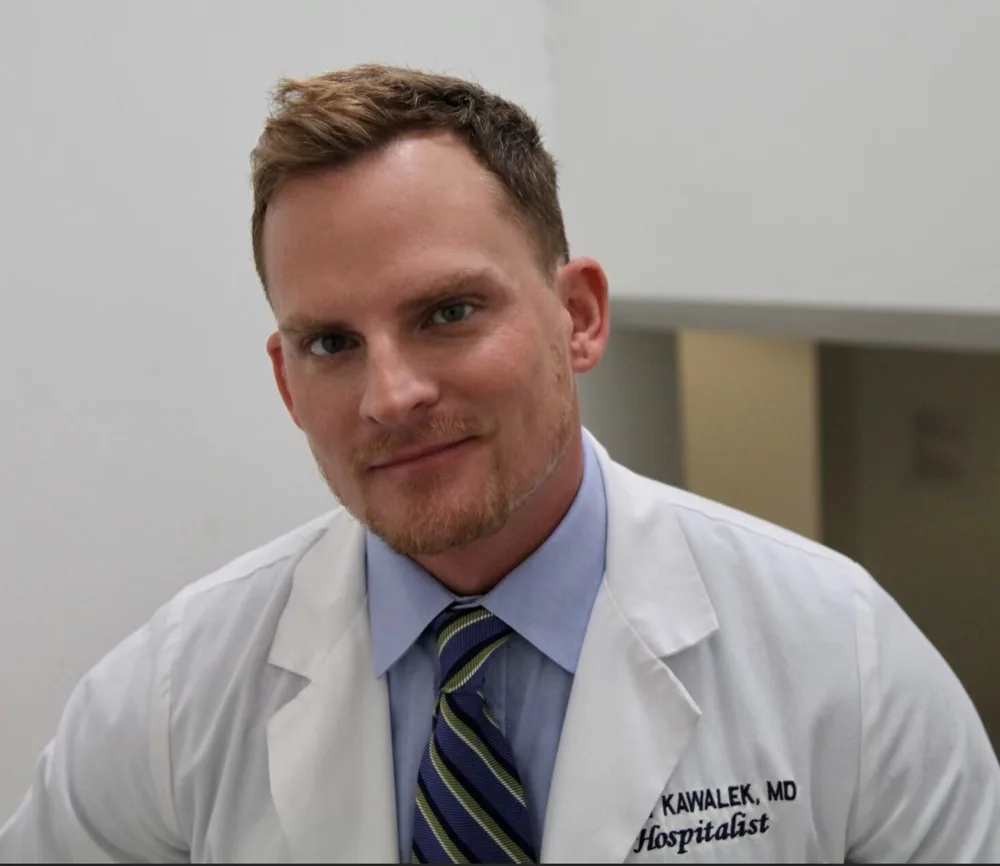
Get my doctor's note →Dr. Kawalek is a hospitalist physician with 15+ years of clinical experience. He founded SickSlip to give patients fast, affordable access to legitimate medical documentation without unnecessary clinical barriers.