Doctor's Note for Anxiety or Depression: A Physician's Guide to Time Off That Protects Your Privacy
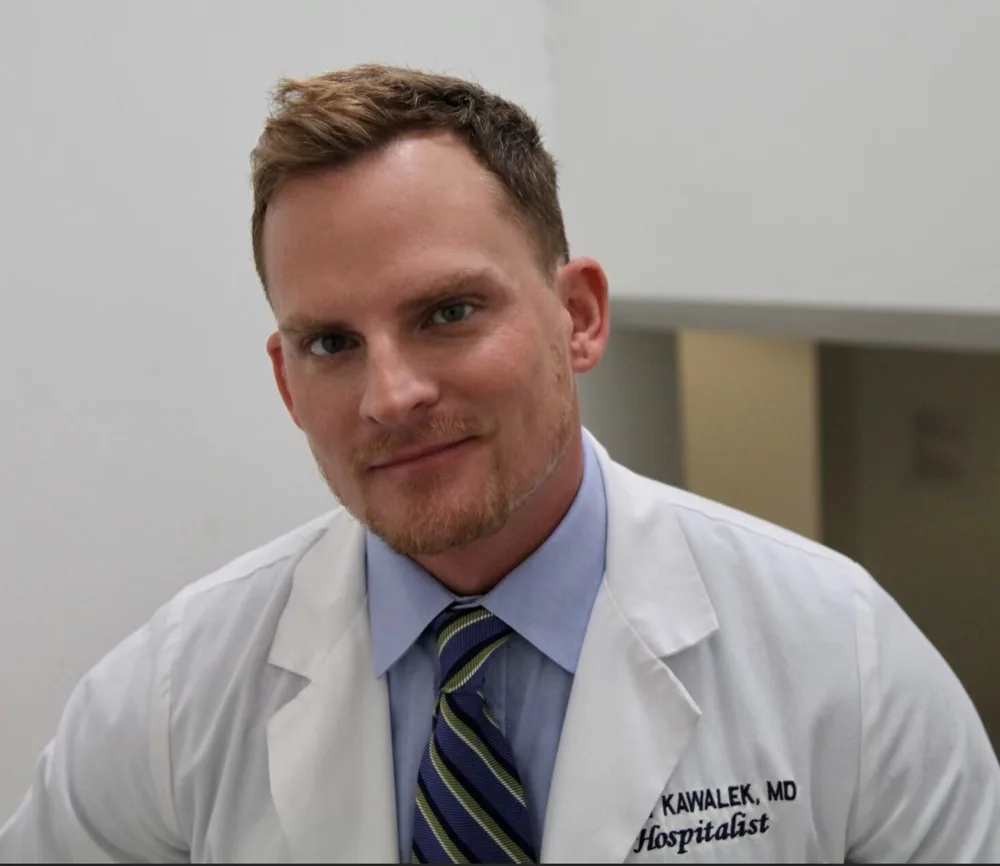
If anxiety or depression has made you unable to work today, two things are probably true: you need the day, and you'd rather not explain your mental health to your manager to get it. Both of those are reasonable. I'm Dr. Adam Z. Kawalek, a board-certified internist, and this is my honest guide to how a doctor's note works for anxiety and depression — what it actually says, how your diagnosis stays private, and the equally honest line where a note stops being the right tool and real care starts.
Short on time? An online doctor's note from SickSlip covers the paperwork; the details below cover the rest.
One thing before anything else: if you're in crisis right now — thoughts of harming yourself, or feeling unsafe — a doctor's note is not what you need today. Call or text 988, free and confidential, 24/7. The rest of this article will still be here.

Anxiety and depression are legitimate medical absences
Let's dispose of the stigma first, because it's medically wrong. Roughly one in five US adults experiences an anxiety disorder in a given year, and more than 8% experience a major depressive episode. These are among the most common medical conditions in the country — more common than diabetes — and on a bad day they impair exactly the things a job requires: concentration, decision-making, sleep, energy, and the ability to be around people safely and productively.
As a physician, I evaluate an acute anxiety episode or a depressive flare the same way I evaluate a migraine or a stomach bug: is this person medically unable to work today? If the clinical picture supports it, the absence is legitimate — full stop. A panic attack at 6 AM is not less real than a fever, and documenting it is not a favor or a workaround. It's ordinary medicine.
What the note actually says — and the diagnosis-privacy rule
Here's the part most people worry about, and the part that should put you at ease: the note does not say "anxiety" or "depression." A properly written physician note states that a licensed physician evaluated you and determined you were medically unable to work for specific dates due to an acute medical condition — general clinical language that meets employer documentation requirements without disclosing your diagnosis. The only way your condition appears on the note is if you ask us to add it, which some people do when an employer wants more detail. That choice is yours and it is off by default.
That's not a courtesy; it's how medical privacy is supposed to work. Under the HIPAA Privacy Rule, your employer is not entitled to your diagnosis — they're entitled to confirmation that the absence was medically warranted and the dates involved. If HR asks "what was wrong with you?", the complete answer is: "my physician submitted documentation." We've written a full guide to your rights when an employer questions a note, and it applies doubly here.
The same privacy holds at verification. Every SickSlip note carries a QR code an employer can scan — and what they see is that the note was validly issued by a licensed physician, the dates, and nothing else. No diagnosis, no medical details, no history. The verification confirms the document is real without opening your chart.
Need a note right now?
Physician-reviewed. Employer-accepted. $29.99 flat fee. No waiting room.
Get my doctor's note →One day versus a pattern: when to involve your own clinician
This is the section a marketing department wouldn't write, and it's the most important one here. There is a real difference between an acute episode — a panic attack, a wave of depression after a hard event, a night of anxiety that left you unable to function — and a pattern. If you're reaching for a day off for the same reason every few weeks, the day off isn't treating anything. It's a pressure valve on a system that needs actual repair.
A documentation service like ours is built for the acute episode: a short absence, documented privately, so you can recover without burning trust at work. It is not treatment, and I'd be doing you a disservice to pretend otherwise. Recurring anxiety or depression deserves a clinician who knows you — a primary care physician, a therapist, a psychiatrist — who can offer therapy, medication if appropriate, and continuity. If the pattern is interfering with work regularly, that's also the point where workplace accommodations (below) become the better tool than repeated sick notes.
Need a note right now?
Physician-reviewed. Employer-accepted. $29.99 flat fee. No waiting room.
Get my doctor's note →How the online process works for anxiety and depression
The process is asynchronous, designed so you never have to perform your worst day on camera. You complete a short intake without an in-person visit: you choose the situation that fits — an anxiety episode, stress or burnout, severe exhaustion, or insomnia (a depressive flare most often arrives through those same doors) — along with the dates affected. If your request fits the short, acute absence this documentation covers, you receive a signed note the same day, in the general language described above.
And an honest boundary: this is not a service for crisis, and no intake form can evaluate safety. If any part of today feels unsafe, skip the intake entirely and use the resources at the end of this article — 988 first. Requests that fall outside this service's short, acute scope are declined and refunded in full; that selectivity is the reason the notes that are issued hold up.
Your rights at work: the basics
Two protections are worth knowing about, plainly and without legal advice. First: diagnosed anxiety disorders and depression can qualify as disabilities under the Americans with Disabilities Act — the EEOC's own guidance is explicit that workers with mental health conditions are protected from discrimination and harassment and may be entitled to reasonable accommodations: schedule changes, quiet workspace, modified break structure. If your condition is ongoing, accommodations are often more durable than one-off absences — that conversation runs through HR and your own treating clinician.
Second: if you work in a state or city with a paid-sick-leave law, accrued sick time generally covers mental health the same as physical health, and using it for a qualifying condition is legally protected. What this article doesn't cover — deliberately — is FMLA and long-term disability: those certify serious, ongoing conditions, require an established treating provider, and are outside what an asynchronous documentation service can or should do.
Frequently asked questions
Will the note say "anxiety" or "depression" on it?
Can my employer ask what my diagnosis is?
What if I need mental-health time off regularly?
Is an online doctor's note valid for a mental-health absence?
If today feels heavier than just a day offHere are people you can talk to — free and confidential:• 988 Suicide & Crisis Lifeline — call or text 988 (24/7)• Crisis Text Line — text HOME to 741741 (24/7)• NAMI HelpLine — 1-800-950-6264 (Mon–Fri, 10am–10pm ET)Following up with your primary care doctor or a licensed mental health professional can also help.
Wondering about a general reset day rather than a diagnosed condition? See our companion guide: a physician's perspective on mental health days. And if your employer pushes back on any physician note, start with know your rights.
Need a note right now?
Physician-reviewed. Employer-accepted. $29.99 flat fee. No waiting room.
Get my doctor's note →Dr. Kawalek is a hospitalist physician with 15+ years of clinical experience. He founded SickSlip to give patients fast, affordable access to legitimate medical documentation without unnecessary clinical barriers.